Virupaksha Temple
District: Vijayanagara Taluk: Hosapete Locality: Hampi Geo-Coordinates: Lat. 15333876 N: Long 76 466822 E
Approach: Airport : Bengaluru Railway Station:
Hosapete Bus station: Hosapete
Brief History
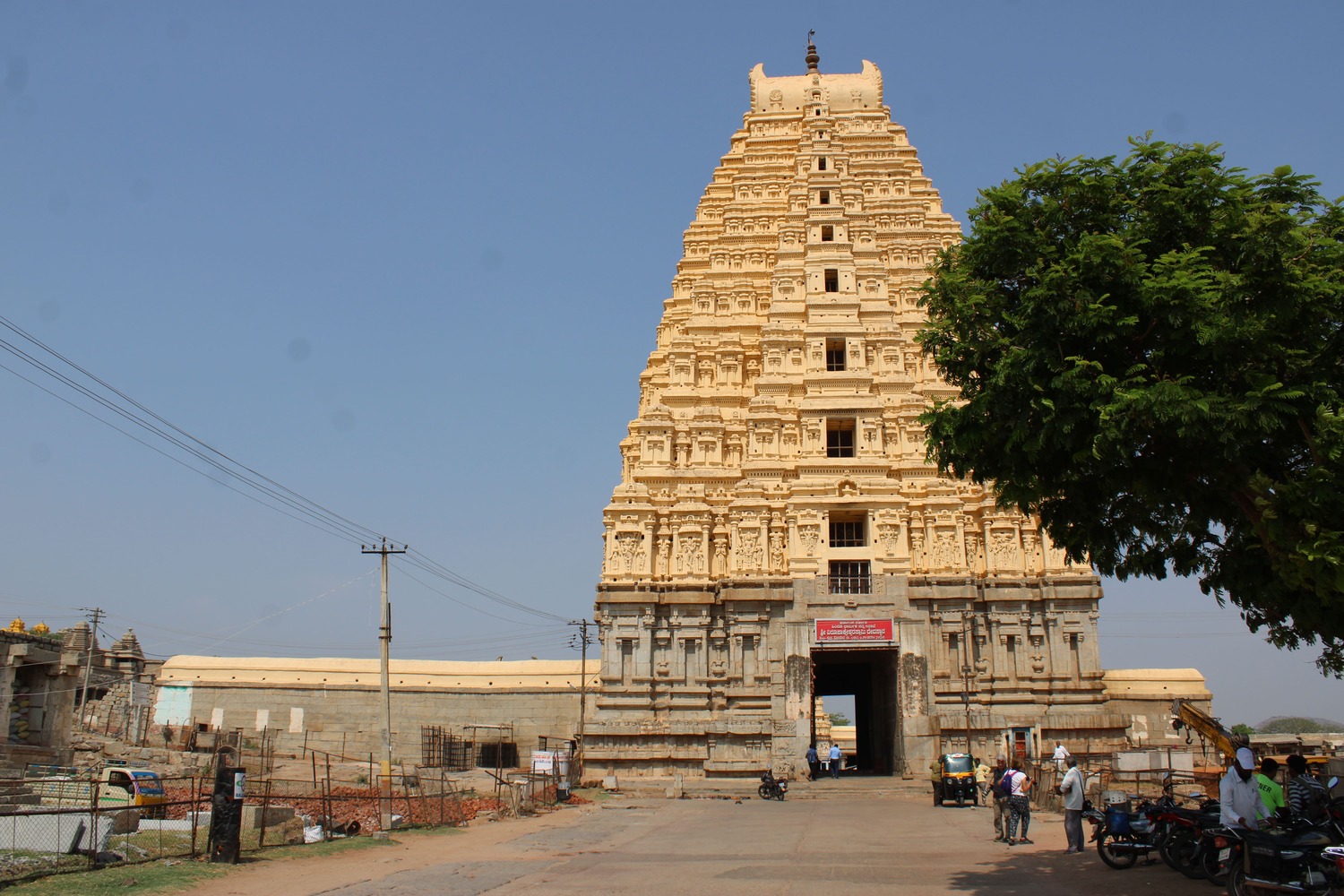
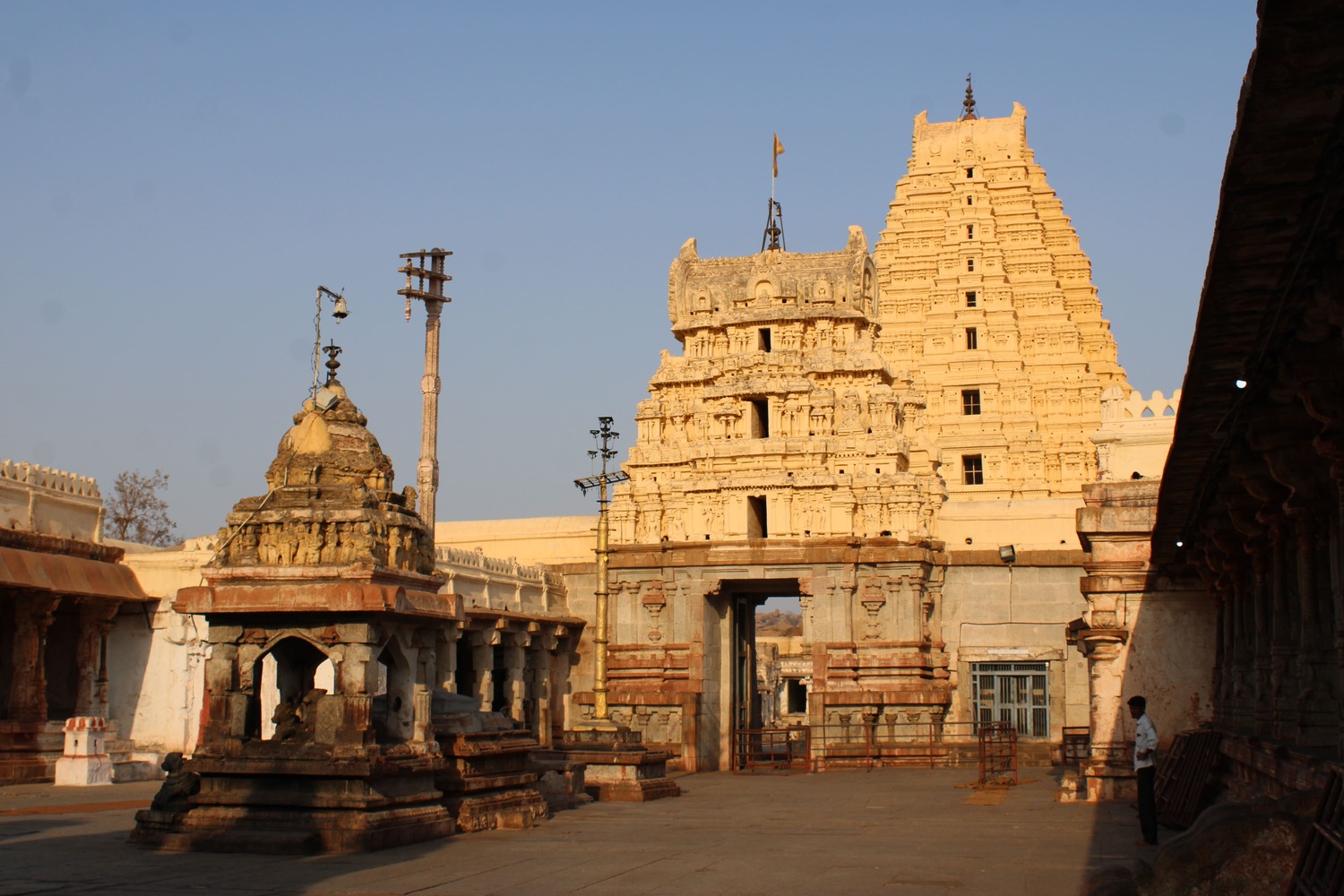
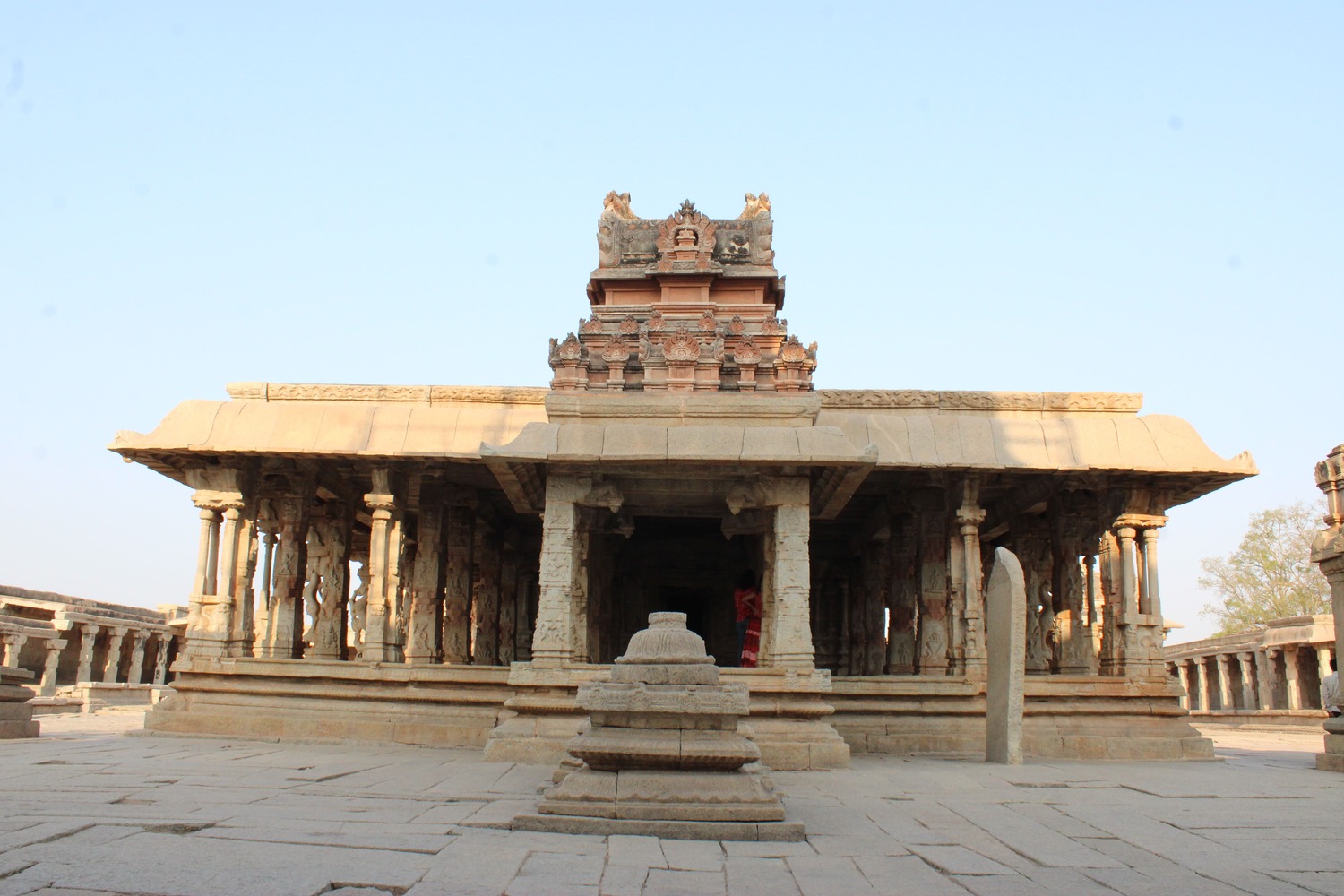
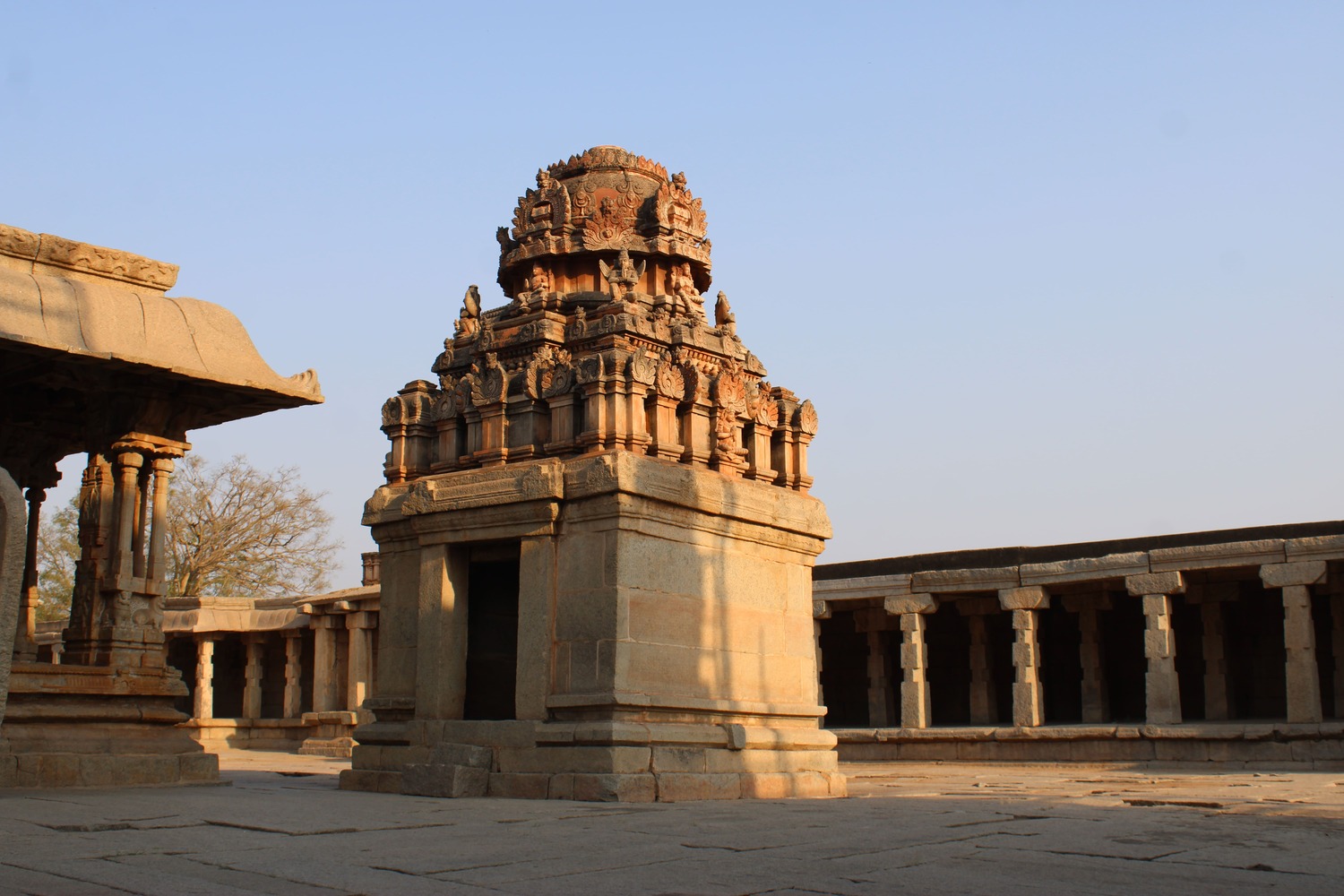
The Virupaksha or Pampapati temple has been considered throughout centuries to be the most sacred of the temples at Hampi.The various parts of the temples complex are within a long rectangular enclosure divided into two large courts. The lofty eastern gopura gives access to the outer court, while a smaller inner east gopura leads to the inner court containing the main vimana with its numerous subsidiary shrines. The lofty east gopura, nine storied structure 52 meters high with the usual two tiered stone base and a superstructure in brick.in the gopura chamber are a few early –type heavy square pillars with bands of scroll-decoration at the base and flat carved slabs in place of the corbles. Form literary evidences it may be inferred that the gopura was probbly built by proluganti Tippa, an officer of Devaraya II(1422-46 CE). It was later repaired by Krishnadevaraya in 1510 C.E.Alarge outer court (78x51m) in front of east gopura has many sub-shrines and a large number of mantapa including the Phalapuja mandapa. The small three storyed inner east gopura, named after Krishnadevaraya forms the entrance to the inner court. It was built by Krishnadevaraya forms the entrance to the inner court. It was built by Krishnadevaraya in about 1510 CE. The inner courts has a pillared cloister along the four sides ,with anumber of subshrines , while the main sanctum of Virupakshawith its axial mandapa is situated in the central part of the court and faces east. The sanctum of Virupaksha has in front an ardhmandapa and a large mahamandapa which is referred o in inscriptions as the rangamandapa. This rangamandapa which is a highly ornate Vijayanagara structure built by Krishnadeva raya in about 1510 C.E. It is a five aisled mandapa with various types of composite pillars. The sixteen pillars of the central rectangle have rampant yalis with chains hanging from their mouths, makaras below
their feet, andriders, on their backs. The mandpa is not considerable height with the roof of the cental aisle raised up further as a celeestory . On all the four sides, along the beams of the clerestory and above there had been originally frieze with many figures in bas-relief. But at present they are mostly hidden behind large modern painted stucco groups. The ceiling of the ranga mandap is noted for its numerous panels of Vijayanagara paintings. The figures depicted include sage Vidyaranya going in procession .Arjuna shooting the matasyantra to win thehand of Draupadi,the Dasvataras, the Dikpalas, Siva as kamadahanamurti, Tripurari and kalyansundara. To the west of rangamandapa is the ardhamandapa, theentrance towhich is flanked by affine pair of huge four-armed dvarapalas of granite,about 2-7 meters high. The garbhagriha is enclosed by a narrow covered pardakshinparakara. The snctum is a tri-tala vimana with a square sikkhara and large central stupid with four smaller stupis at the corners . The walls of the garbhagariha are made of large central stupid with four smaller stupis at the corners. The walls of the grbhagrila and large plain neatly-dressed slabs. The sanctum enshrines the well-known Virupakshalinga. A large number of subsidiary shrines in the inner court including those of muktinarasimha, patalesvara and Nava Durga. The Mukti Narasimha shrine nearby has a small seated deity,. The image is a fine specimen of chalukyan sculpture. Next to it is the Tarakesvara shrine with a small figure of siva with Parvati seated on hislap. Near the south-west corner of the court is a Sarasvati shrine with asmall and graceful black stone image of a twoarmed seated Devi playing on a via. The figure is surrounded by an ornate prabhali with pierced stonework. The icon is in the Chalukyan style. The western corridor contains a much worn out black stone figure of a six armed Mahishamardini. Behind the west corridor of the temple is a small shrine dedicated to sage Vidyaranya. The north corridor contains two ofthe earliest extant structures of the temple, namely, the Parvati and Bhuvenesvari shrines. Both have the highly ornate and decorated black stone pillars of the lathe-turned type, carved ceilings and wide door-jambs with elaborate pierced cut work, characterstic of the later Chalukyan (kalyana Chalukya) period. On grounds of style the two shrines may be assigned to about the twelfth century CE. The tall five storeyed north gopura, known as the kankagiri gopura, is ornamented with decorative pilasters.
Monolithic bull
District: Vijayanagara Taluk: Hosapete Locality: Hampi Geo-Coordinates: Lat.15333876 N: Long 76 466822 E Approach: Airport : Bengaluru Railway Station: Hosapete
Bus station : Hosapete
Brief History
At the end of the long Virupaksha bazaar a massive couchant Nandi facing west is accommodated within a pillared pavilion. Nandi being the Vehicle of lord Siva faces the Virupaksha temple where Shivalinga is the principal deity. The main Pavilion built on moulded basement is flanked by lathe turned austere pillared mandapa with flat roof.
Sasivekalu Ganesha Temple
District: Vijayanagara Taluk: Hosapete Locality: Hampi Geo-Coordinates: Lat.15 331439 N: Long 76 459946
Approach: Airport: Bengaluru Railway Station: Bellary Bus
station: Hosapete
Brief History
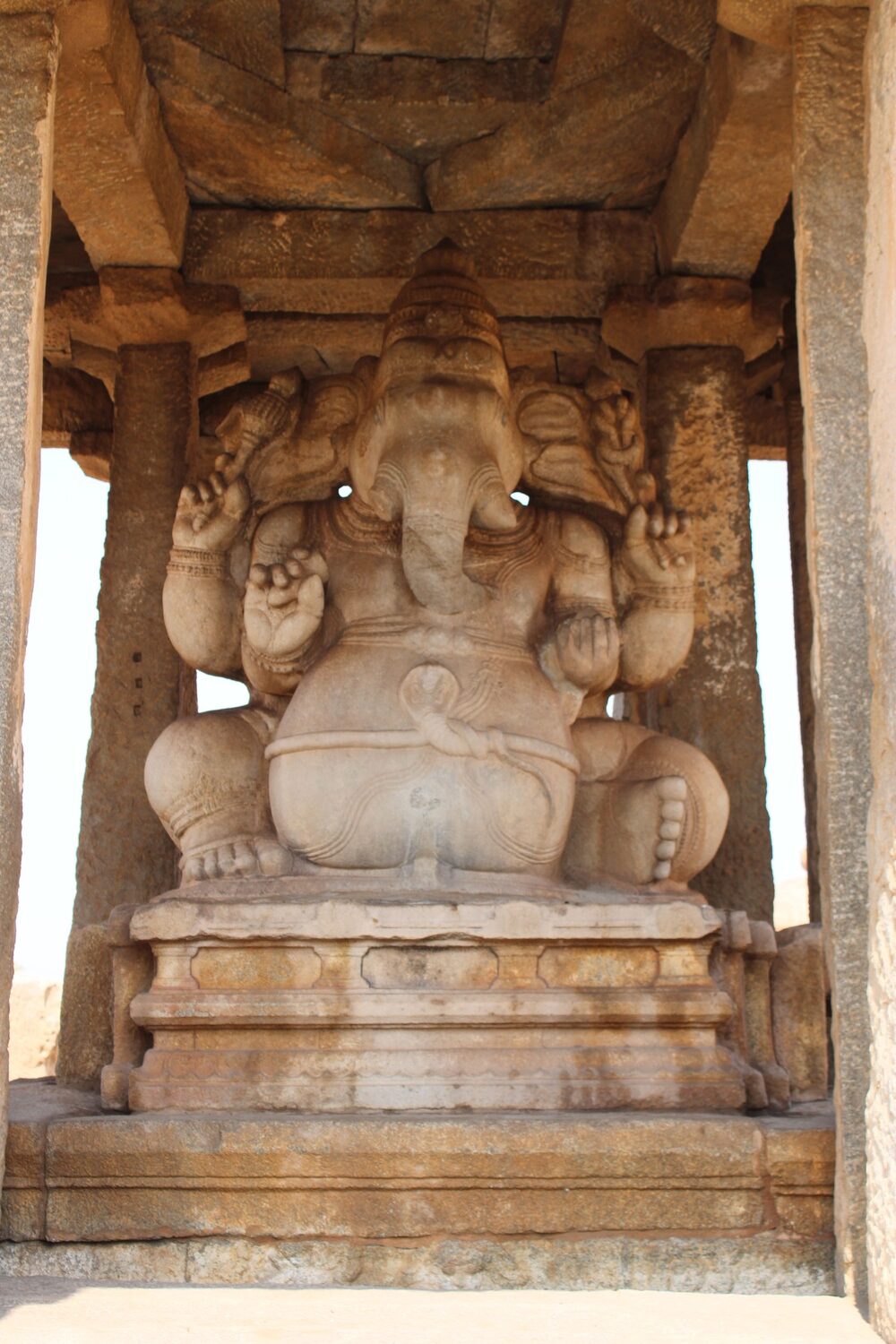
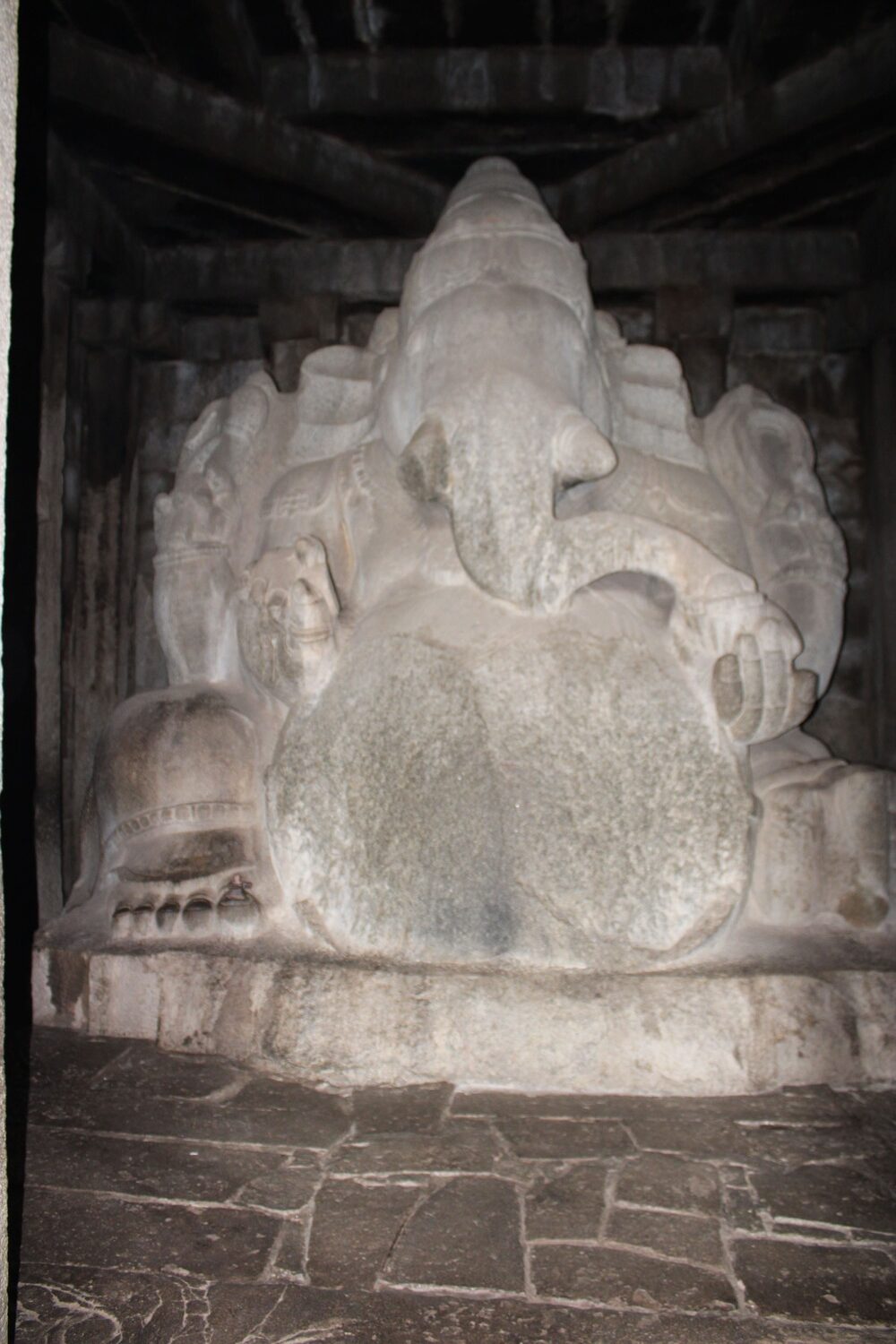
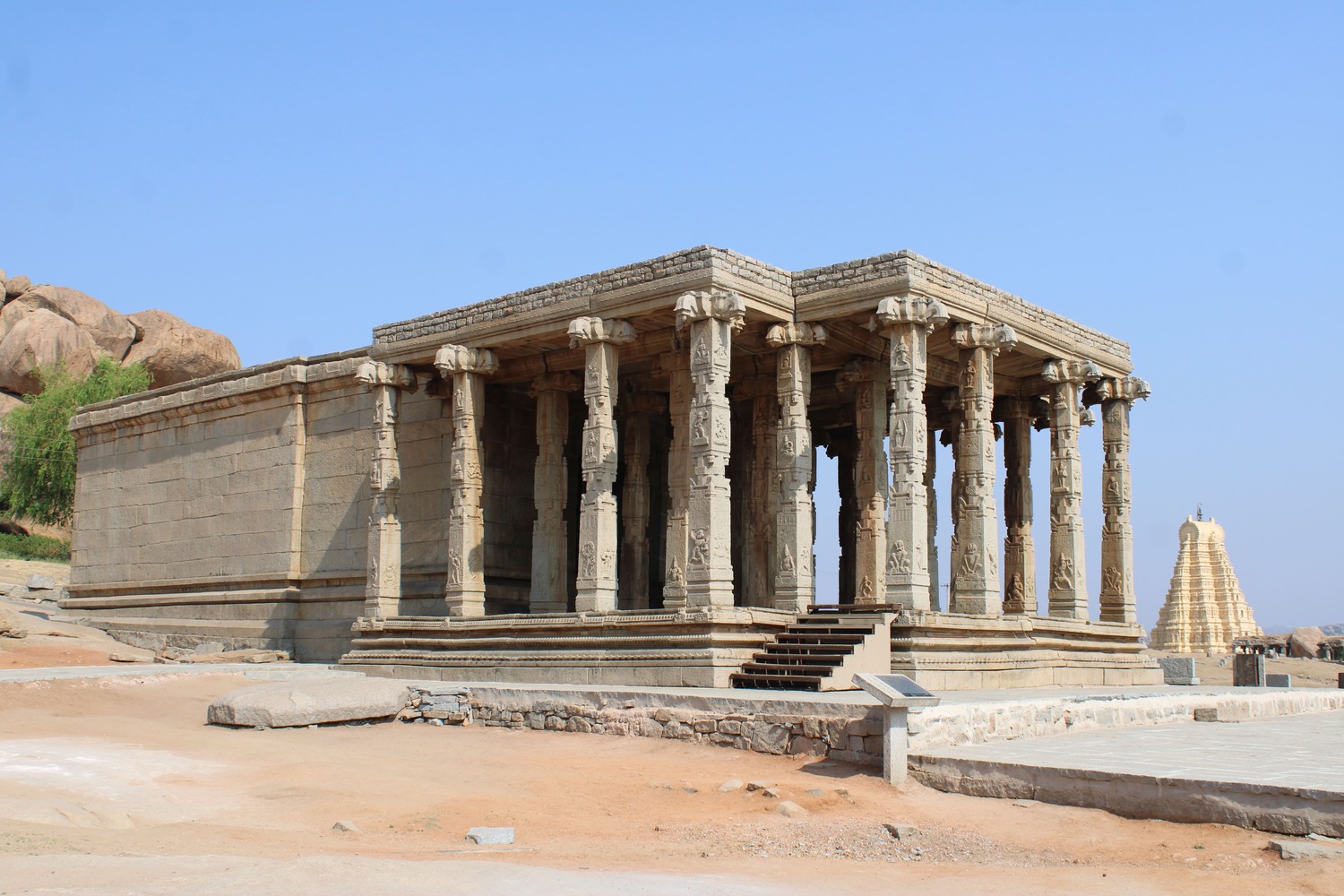
The seated Sasivekalu or Musard seed Ganesha (as per local traditions), carved in round on a massive boulder is housed within a large open pillared mandapa with plain rough square pillars on the southern slope of the Hemakuta hill. It measure 2.4 meters in height. Ganesha is shown holding ankusa and broken tusk in his right hands and modaka and pasa in his left hands. The deity wears karanda makuta, Channa-hara, keyura, kankana, channavira, yajnopavita and sarpa udarabandha. The pedestal is of padma pitha type over which the diety is seated. The open pillared mandapa has twelve tall, slender pillars carrying chamfered abacus supporting the eaves and ceiling above. Close to Ganesha on all the four corners of the centrally located image are fur slender pillars in each coner. The central ceiling of the mandapa is of samatala type and lozenge shaped.
Sasivekalu Ganesha Temple
District: Vijayanagara Taluk: Hosapete Locality: Hampi Geo-Coordinates: Lat.15 331439 N: Long 76 459946 E Approach: Airport: Bengaluru Railway Station: Bellary Bus
station: Hosapete
Brief History
The seated Sasivekalu or Musard seed Ganesha (as per local traditions), carved in round on a massive boulder is housed within a large open pillared mandapa with plain rough square pillars on the southern slope of the Hemakuta hill. It measure 2.4 meters in height. Ganesha is shown holding ankusa and broken tusk in his right hands and modaka and pasa in his left hands. The deity wears karanda makuta, Channa-hara, keyura, kankana,
channavira, yajnopavita and sarpa udarabandha. The pedestal is of padma pitha type over which the diety is seated. The open pillared mandapa has twelve tall, slender pillars carrying chamfered abacus supporting the eaves and ceiling above. Close to Ganesha on all the four corners of the centrally located image are fur slender pillars in each coner. The central ceiling of the mandapa is of samatala type and lozenge shaped.
Vishnupada Temple
District: Vijayanagara Taluk: Hosapete Locality: Hampi Geo-Coordinates: Lat.15 331160 N: Long 76 460112 E Approach: Airport: Bengaluru Railway Station: Bellary Bus
station: Hosapete
Brief History
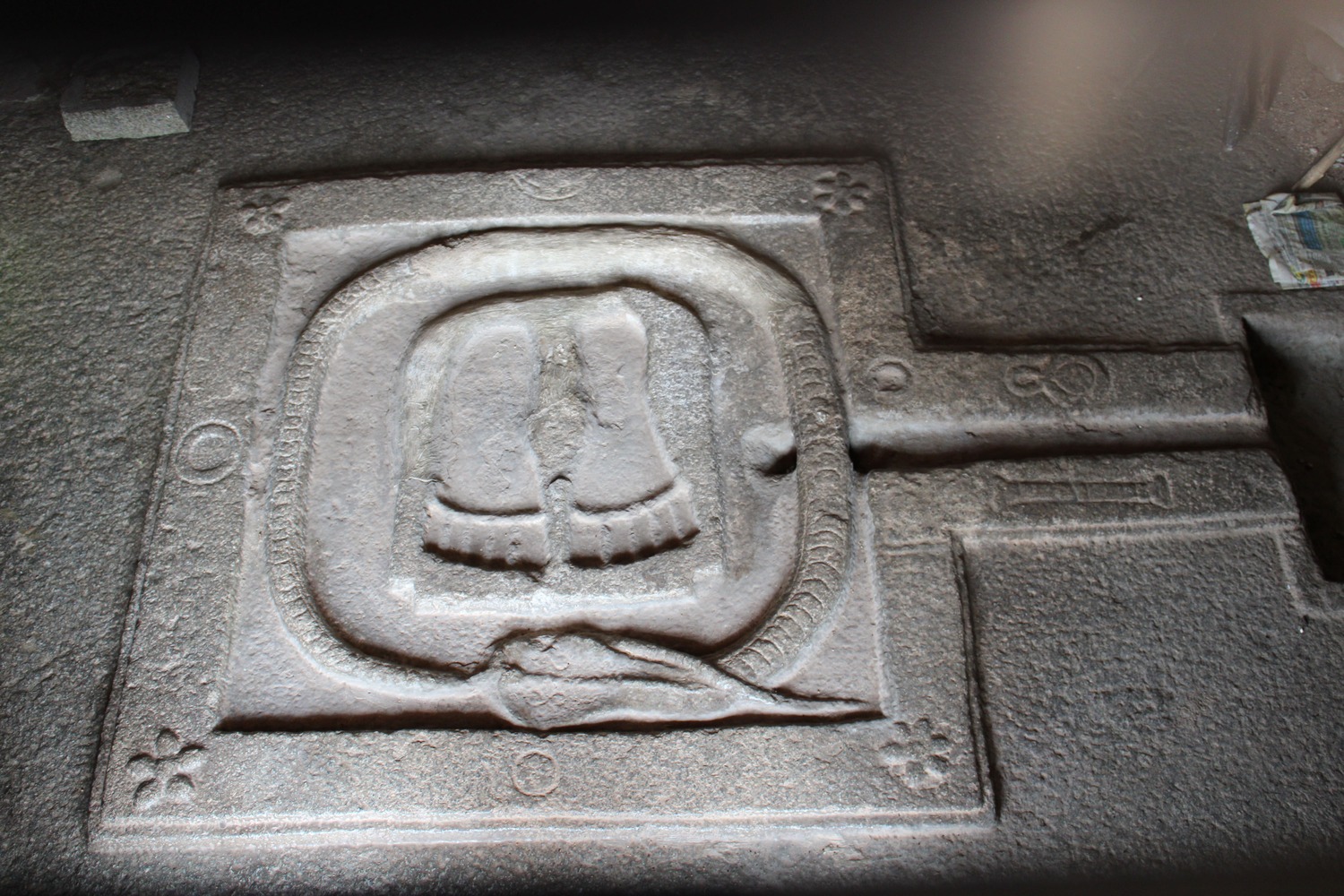
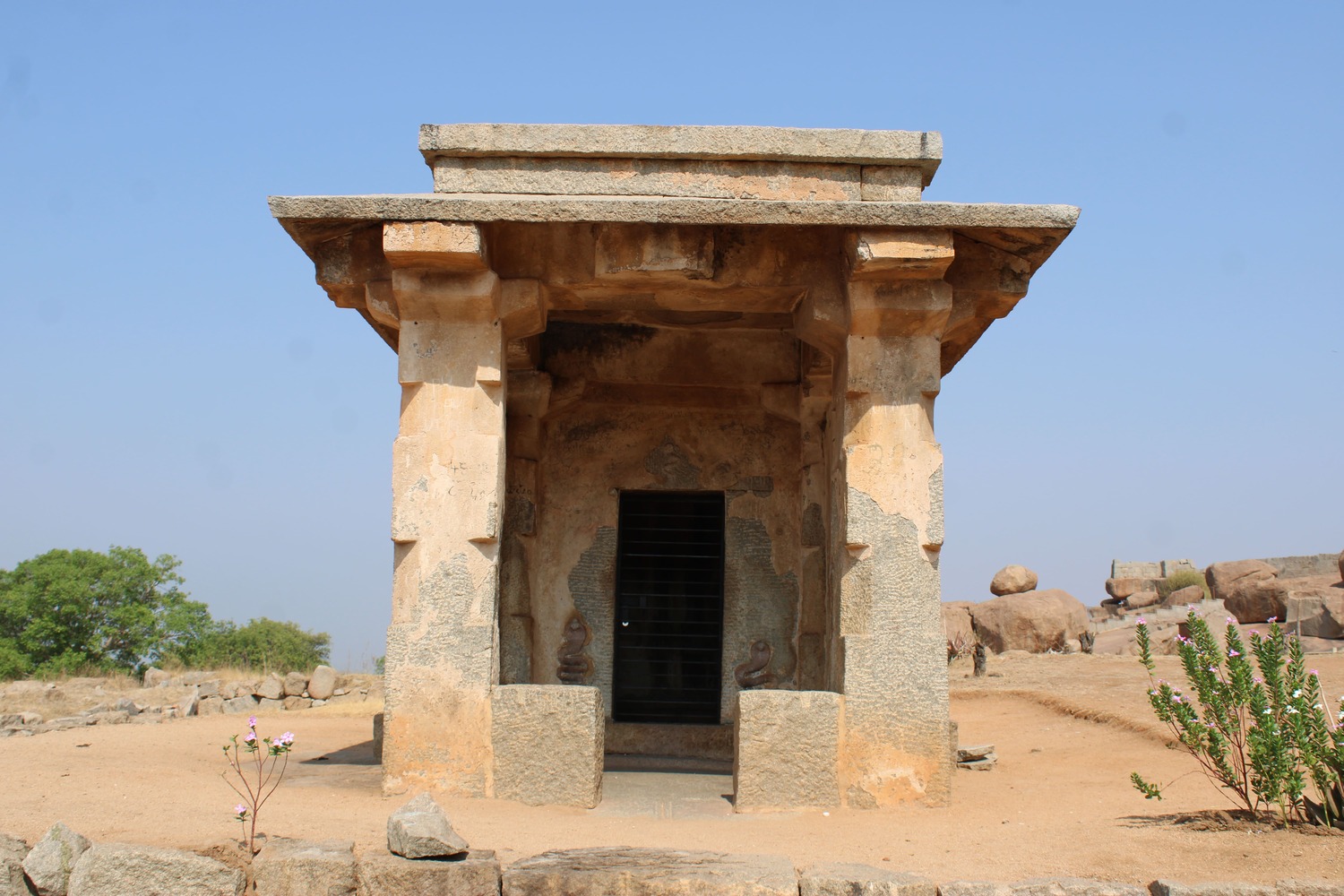
This small temple dedicated to Vishnu and datable to circa sixteenth century C.E. is situated to the right of the Sasevekalu Ganesha temple. The temple consists of a garbhagriha and an open mukha-mandapa. The shrine chamber is built to protect a pair of Vishnupads, which is believed to be that of the foot prints of Lord Vishnu, carved on a natural sheet of rock. The relief of Vishnupada is encircled by a snake which is also carved in relief andthere are bas-reliefs of snakes on the doorjambs and on the south wall of the garbhagriha. The pillars of this temple can be assigned to the early phase of the Vijayanagara architecture type.
Krishna Temple
District: Vijayanagara Taluk: Hosapete Locality: Kamalapura Geo-Coordinates: Lat 15 330266 N: Long 76 460444 E Approach: Airport: Bengaluru Railway Station:
Hosapete Bus Station: Kamalapura
Brief History:
This is situated to the north of the image of Narasimha. This large and ornate east facing temple complex is built in typical Vijayanagara style. A large open prakara with high walls contains the Swami and Amman shrines and many subshrines. The main temple contains the usual typical arrangement of an open mahamandapa, an ardhamandapa and a covered prakara running round the garbhagriha and antarala. One of the pillars in the
ardhamandapa is noteworthy, as ll the ten incarnations (avataras) of Vishnu including the rare form of Kalki are carved on it.Kalki is depicted as a seated figure with a horse’s head.
The garbhagriha and antarala have an ornate and wellfinished exterior with fine bas reliefs. The sanctum is a three-storeyed vimana with a circular sikhara, much dilapidated The Amman shrine is to the north-west of the Swami sanctum and both have sala
Kamalapura sikharas. The Krishna temple is interesting for the numerous sub shrines it contains. One of these in the south has a stucco figure of Subrahmanya seated on a peacock. The presence of a Subrahmanya shrine in a Krishna temple is rather unique. The three gopuras of the temple east, south and north are much dilapidated. The large east gopura has only a part of its superstructure existing. Its west face contains many fine stucco figures of warriors with shields and spirited horses and elephants. This probably represents a war scene connected with the Orissan campaign of Krishnadevaraya.
Between the two prakaras towards the south is a huge dome roofed granary built on a slopy rock bed. It is a huge hall, rectangular on plan and has six bays. Externally austere, it has a staircase heading to the roof, comprising of six domes, all forming an opening in the centre probably used for filling the granary. At a short distance from the main entrance towards the east along the outer prakara a series of flights of steps lead to the huge 500 meter long car street (Krishna Bazaar) flanked by rows of mandapas. Behind the northern row of bazaar mandapa at a distance of 200 meter from the temple is the usual tank Lokapavani, surrounded by a colonnade with entrance from the west. The interior veneered with a flight of steps accommodates a four-pillared pavilion at the centre used 1or keeping the processional deity (Utsavamurti) having brick and lime superstructure.
It has an inscription of Krishnadevaraya, dated 1513 C.E. recording that an image of Balakrishna, which he had brought from a temple in Udayagiri (Orissa), was enshrined in a mandapa of this temple.
Ling Temple near Narasimha Statue
(Badaviling Temple)
District: Vijayanagara Taluk: Hosapete Locality: Kamalapura Geo-Coordinates: Lat 15 329339 N:Long 76
459045 E Approach: Airport: Bengaluru Railway Station:
Hosapete Bus Station: Kamalapura
Brief History:
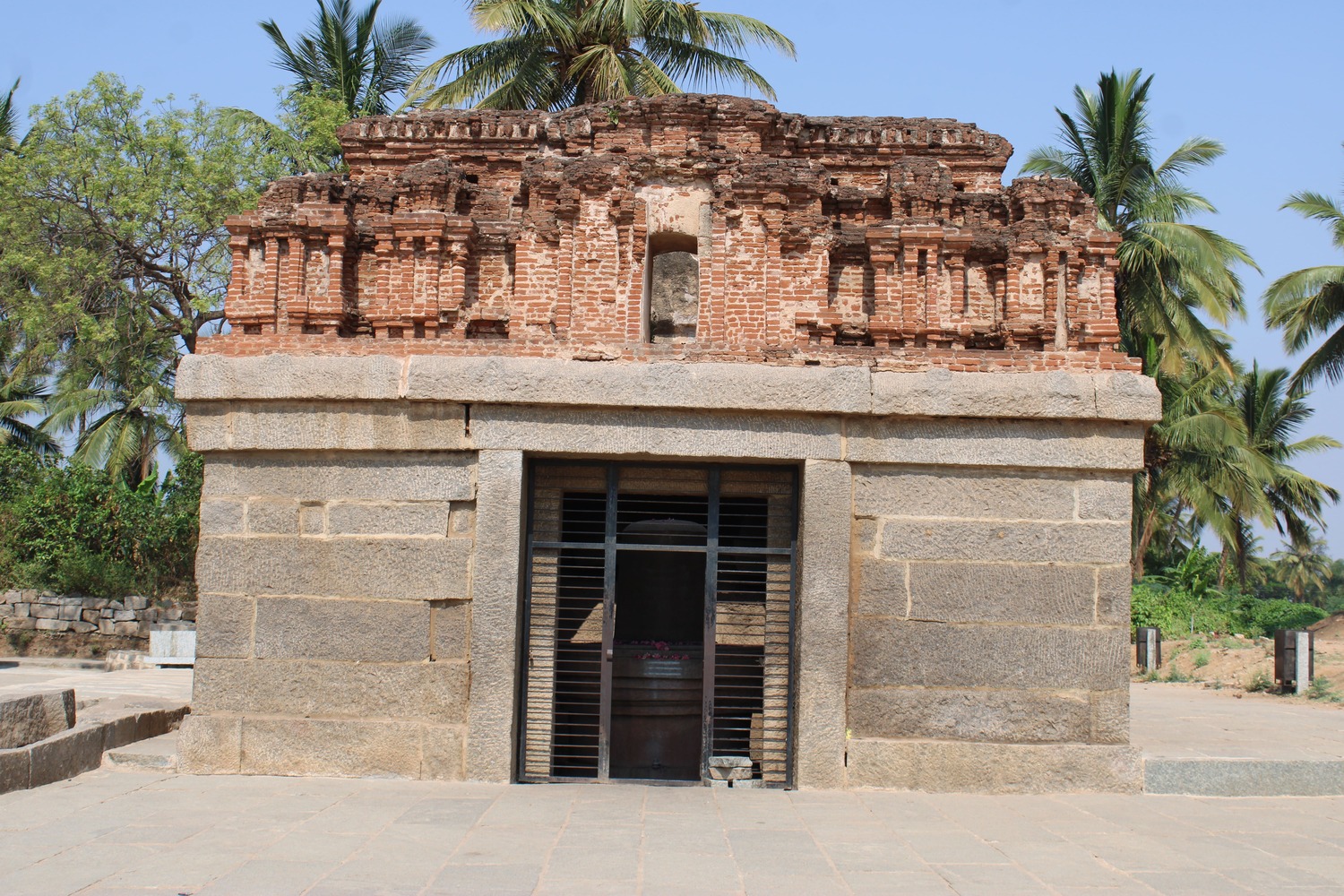
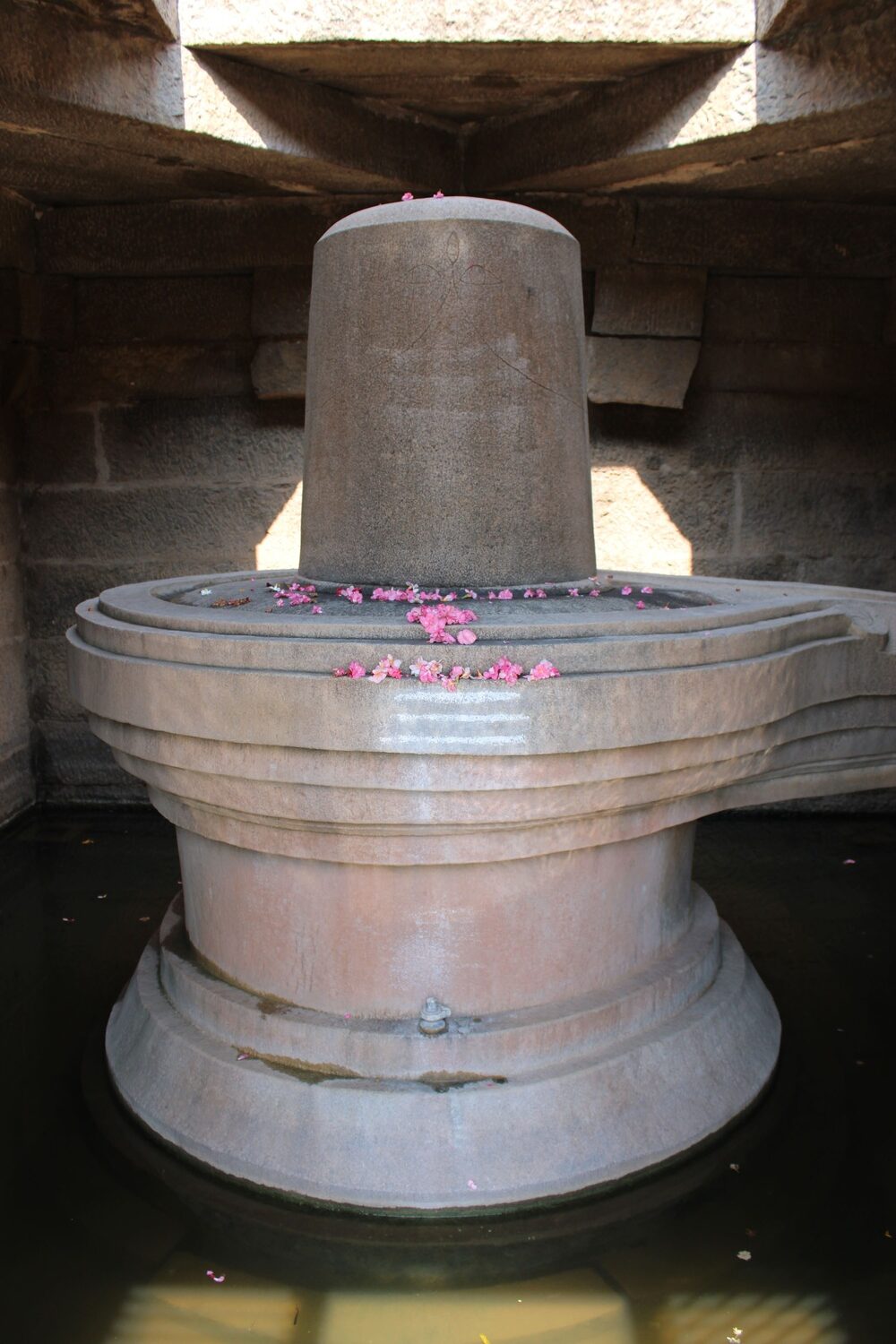
Accommodated within a square chambered Siva temple is an enormous monolithic Linga (about 3 meter high) with the part of the base submerged permanently under the running water. The exterior wall built in stone is austere and the brick superstructure is damaged at the top.
Narasimha Statue
District: Vijayanagara Taluk: Hosapete Locality: Kamalapura Geo-Coordinates: Lat 15 329165 N: Long 76
468808 E Approach: Airport: Bengaluru Railway Station:
Hosapete Bus Station: Kamalapura
Brief History:
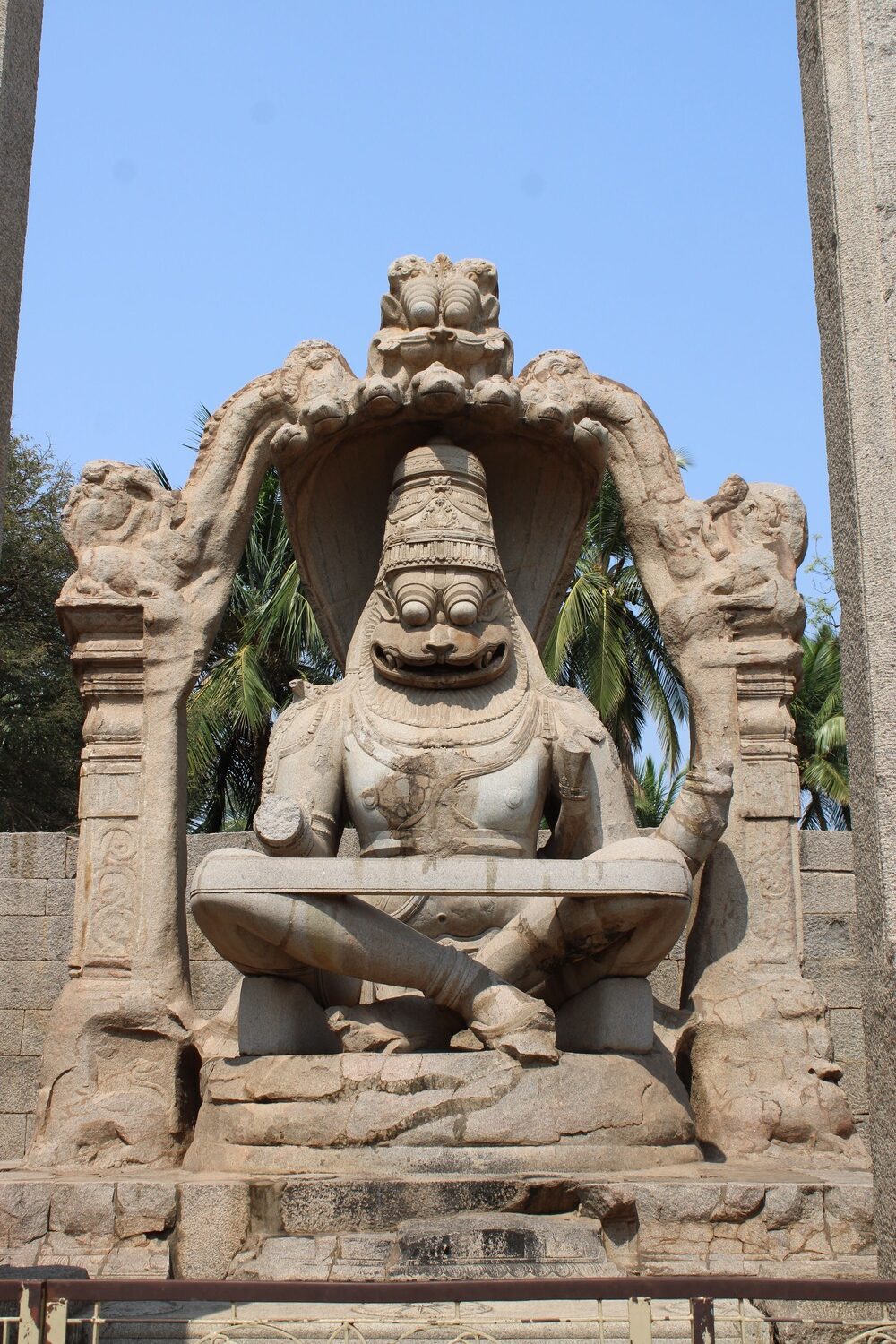
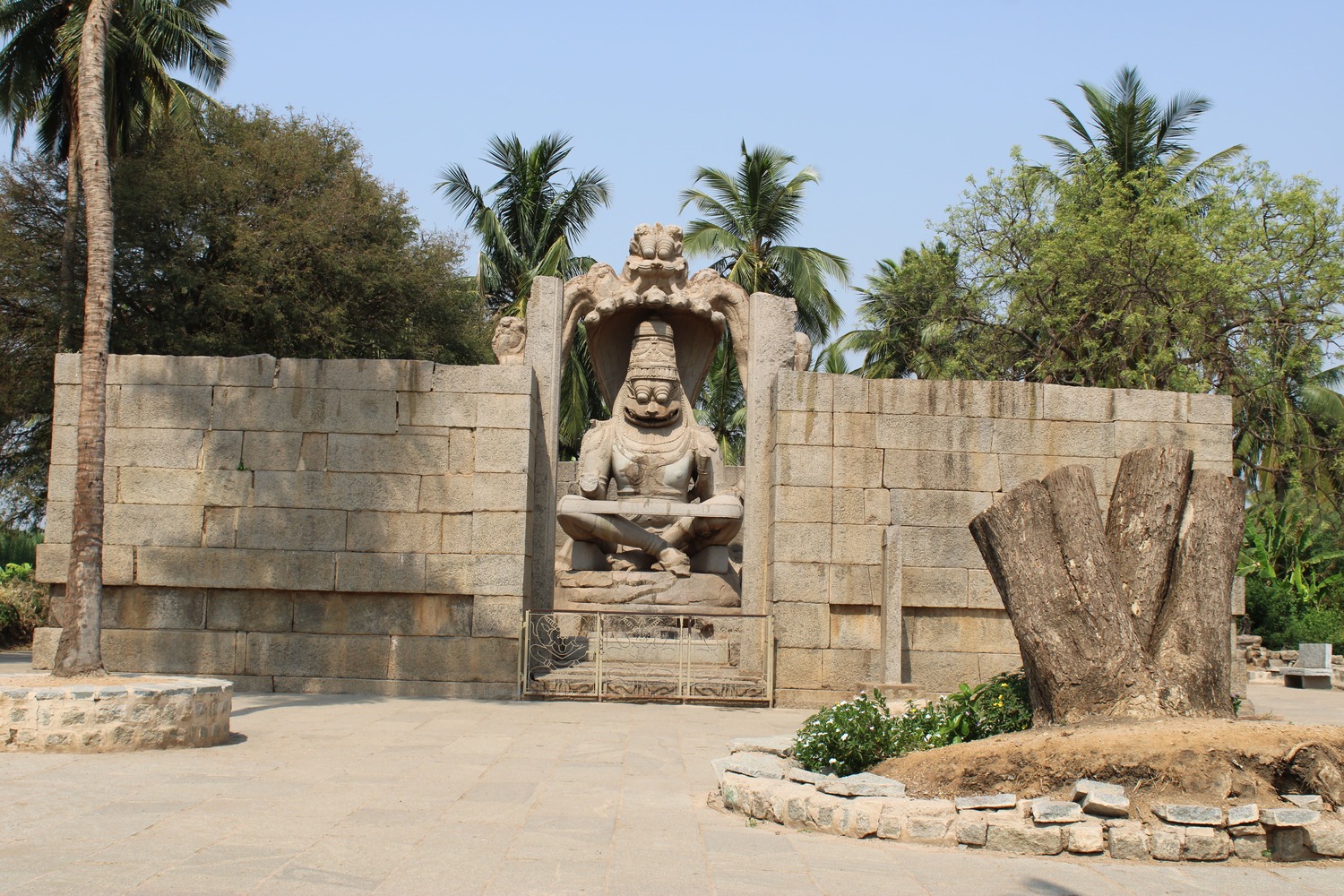
The monolithic Narasimha statue, about 6.7 meter tall stands within a walled enclosure, near the temple meter permanently wall Krishna temple. It is a carefully carved and well finished colossal icon. It is a four armed seated figure, but all the arms are now broken. There is a large seven-hooded Naga above the head. Originally, superstructure there was a figure of Lakshmi seated on the left thigh of the God. The deity is seated below a
makaratorana springing from two ornate pilasters. The image was one of the last contributions of Krishnadevaraya to Vijayanagarapattana. One of the inscriptions found in the region states that Krishnadevaraya made a grant in 1528 C.E. to the temple of Lakshmi Narasimha which he had built and that the deity was made out of a single
granite boulder by a Brahmin named Krishnabhatta.
Chandikesvara Temple
(Notified as Group of sati memorials and Chandikesvara Temple)
District: Vijayanagara Taluk: Hosapete Locality: Kaddirampur Geo-Coordinates: Lat.15 326394 N: Long 76 459820 E
Approach: Airport : Bengaluru Railway
Station: Hosapete Bus station: Hosapete
Brief History
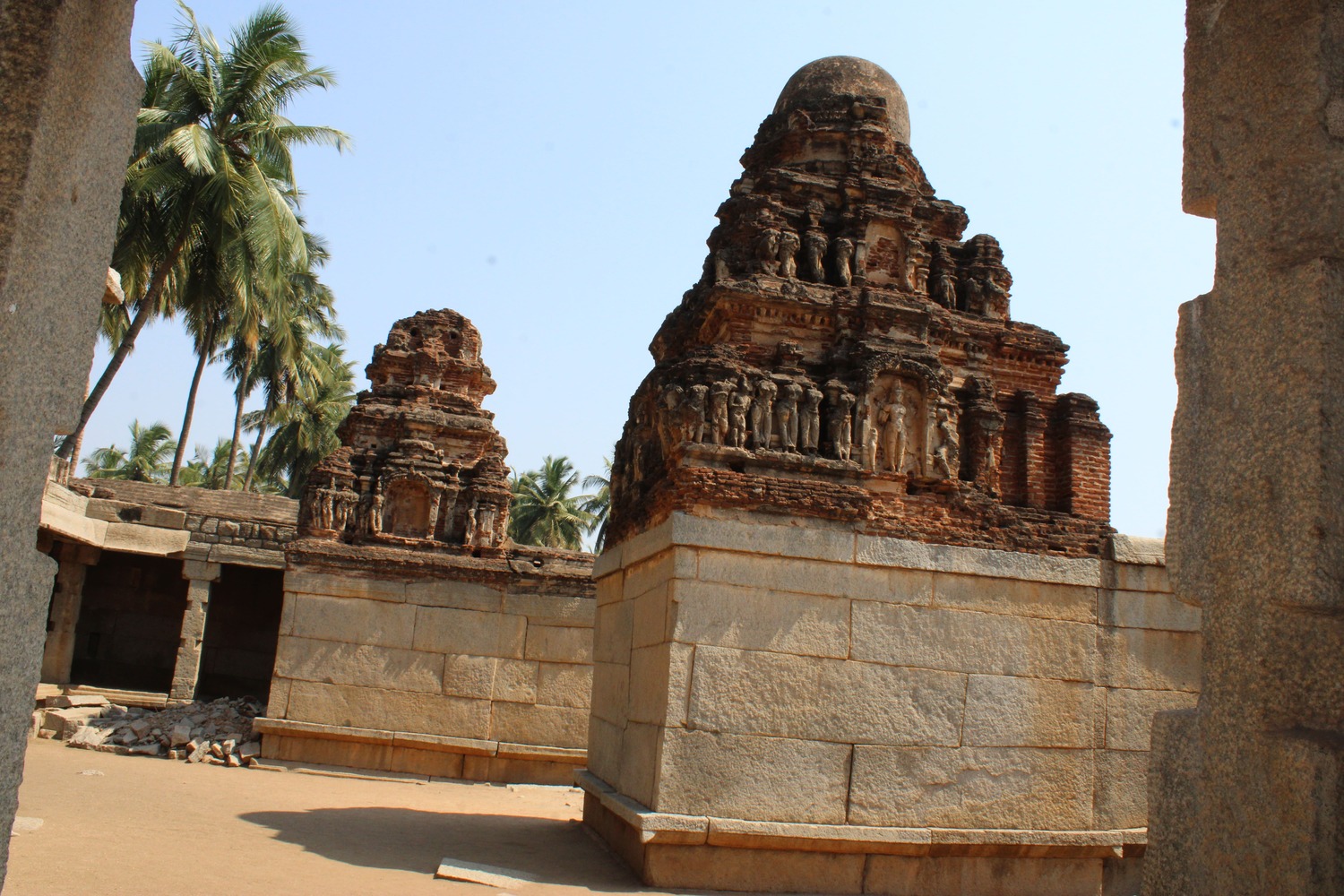
The Temple known as Chandikesvara or Chandikesava, is a Vaishnava temple datable to circa sixteenth century C.E The east facing temple has all the characteristic features of a typical Vijayanagara structure with an open mahamandapa having yali and other composite pillars. On plan,the main temple has agarbhagriha, an antarala and sabhamandapa.Over the garbhagriha brick superstructure with three talas capped by a sikhara is found. The empty garbhagriha has a pitha carved with the figure of Garuda in anjalimudra. Thereis an Amman shrine, on the north,having on plan a garbhagriha, an antarala and asabhamandapa and over its garbhagriha is a brick superstructure oftwo tiers with sala sikhara. Apillared and over its garbhagriha is a brick superstructure of two
tiers with sala sikhara.A pillared cloister runs around the temple complex.
Sarasvati Temple
District: Vijayanagara Taluk: Hosapete Locality: Singanathanahalli Geo-Coordinates: Lat 15 319432 N: Long 76
433234 E Approach: Airport: Bengaluru Railway Station:
Hosapete Bus Station: Kadirampura
Brief History:
This dilapidated temple, datable to circasixteenth-seventeenth century C.E., is located on a rocky hill namely Svamappagudda, in the south- western part of the deserted village. On plan it has a garbhagriha, facing east. There is a small plastered tower over the roof of the garbhagriha. The doorjambs of the an antarala and a mahamandapa entrance leading to the garbhagriha are plain with kumbha motif at the base. Inside the garbhagriha there are two
pedestals and a mutilated Nandi sculpture.
«gÀÆ¥ÁPÀë zÉêÁ®AiÀÄ
f¯Éè: ವಿಜಯನಗರ vÁ®ÆèPÀÄ: ºÉƸÀ¥ÉÃmÉ ¸ÀܼÀ: ºÀA¦
¨sÀÆ ¤zÉðñÀ£À: CPÁëA±À 15 333876 G.; gÉÃSÁA±À 76 466822 ¥ÀÆ
vÀ®Ä¥ÀÄ«PÉ: «ªÀiÁ£À ¤¯ÁÝt: ¨ÉAUÀ¼ÀÆgÀÄ gÉʯÉé ¤¯ÁÝt: ºÉƸÀ¥ÉÃmÉ
§¸ï ¤¯ÁÝt: ºÉƸÀ¥ÉÃmÉ
EzÀÄ ºÀA¦AiÀÄ°ègÀĪÀ zÉêÁ®AiÀÄUÀ¼À°è CvÀåAvÀ ¥ÁæaãÀªÁzÀzÀÄÝ. EzÀÄ ¥À«vÀ æ ªÀÄvÀÄÛ ±ÉæõÀתÁzÀ ºÁUÀÆ CµÉÖÃ
¥ÀæªÀÄÄRªÁzÀ zÉêÁ®AiÀÄ. E°è£À ¥ÀæzsÁ£À zÉêÀvÉ «gÀÆ¥ÁPÀ ë£À£ÀÄß ¥ÀA¥Á¥Àw JAzÀÄ PÀgÉAiÀįÁUÀÄvÀÛzÉ.
¥ÀA¥ÁwÃxÀð CxÀªÁ ¥ÀA¥Á £À¢AiÀÄÄ §æºÀä£À ªÀÄUÀ¼ÀÄ JA§ £ÀA©PÉ E°è£À d£ÀgÀzÀÄÝ. vÀÄAUÀ¨sÀzÁæ £À¢AiÀÄ£ÀÄß F
¥ÀæzÉñÀzÀ°è ¥ÀA¥Á£À¢ JAzÀÄ PÀgÉAiÀįÁUÀÄvÀÛzÉ. vÀÄAUÀ¨s ÀzÁæ £À¢AiÀÄ zÀQët zÀAqÉAiÀÄ ªÉÄÃ¯É ¥ÀA¥Á¥Àw
zÉêÁ®AiÀÄ«zÉ. zÉêÁ®AiÀÄzÀ ««zs À CAUÀUÀ¼À£ÀÄß DAiÀÄvÁPÁgÀzÀ ¥ÁæPÁgÀzÀ ªÀÄzs ÀåzÀ°è ¤«Äð¸À¯ÁVzÉ. C®èzÉ F zÉêÁ®AiÀÄzÀ CAUÀUÀ¼À£ÀÄß ¥ÀæªÀÄÄRªÁV JgÀqÀÄ PÉ ëÃvÀæUÀ¼À°è «AUÀr¸À¯ÁVzÉ. JvÀÛgÀªÁzÀ UÉÆÃ¥ÀÄgÀzÁégÀªÀÅ zÉêÁ®AiÀÄzÀ ºÉÆgÀ ¥ÁæPÁgÀPÉÌ ¥ÀæªÉñÀªÀ£ÀÄß MzÀV¸ÀÄvÀÛzÉ. ºÁUÉAiÉÄà ¥ÀƪÀð ¢QÌ£À°ègÀĪÀ QjAiÀÄ UÉÆÃ¥ÀÄgÀzÁégÀªÀÅ zÉêÁ®AiÀÄzÀ M¼À DªÀgÀtPÉÌ ¥ÀæªÉñÀ MzÀV¸ÀÄvÀÛzÉ. E°è «gÀÆ¥ÁPÀ ë£À zÉêÁ®AiÀÄ, ªÀÄvÀÄÛ EvÀgÀ G¥À zÉêÁ®AiÀÄUÀ¼ÀÄ PÀAqÀħgÀÄvÀ ÛªÉ. Qæ.±À. 1520gÀ°è ºÀA¦UÉ ¨sÉÃn ¤ÃrzÀ qÉÆ«ÄAUÉÆà ¥Éøï£À «ªÀgÀuɬÄAzÀ zÉêÁ®AiÀÄzÀ EA¢£À J¯Áè CAUÀUÀ¼ÀÄ CªÀ£À PÁ®PÁÌUÀ¯Éà ¨É¼ÀªÀtÂUÉ ºÉÆA¢zÀÄÝzÀÄ RavÀªÁUÀÄvÀÛzÉ. «gÀÆ¥ÁPÀ ë zÉêÁ®AiÀĪÀÅ ¥ÀƪÁð©üªÀÄÄRªÁVzÉ. EzÀgÀ ªÀÄÄAzÉ ºÀA¦ §eÁógï EzÉ. JgÀqÀÄ CAvÀ¹Û£À Cw GzÀݪÁzÀ ¸Á®Ä ªÀÄAl¥ÀªÀ£ÀÄß F zÉêÁ®AiÀĪÀÅ 52 Cr JvÀÛgÀ«gÀĪÀ MA¨sÀvÀÄÛ vÀ®UÀ¼À UÉÆÃ¥ÀÄgÀªÀ£ÀÄß ºÉÆA¢zÉ. CzÀ£ÀÄß JgÀqÀÄ ºÀAvÀzÀ PÀ°è£À C¢üµÁ×£ÀzÀ ªÉÄÃ¯É ¤«Äð¸À¯ÁVzÉ. UÉÆÃ¥ÀÄgÀzÀ ªÉÄð£À ¨sÁUÀªÀ£ÀÄß EnÖUÉ, UÁgÉ ªÀÄvÀÄÛ ªÀÄgÀªÀ£ÀÄß §¼À¹ ¤«Äð¸À¯ÁVzÉ. UÉÆÃ¥ÀÄgÀzÀ CAPÀtzÀ°è PÀAqÀħgÀĪÀ PÉ®ªÀÅ PÉÆoÀrUÀ¼À°è «dAiÀÄ£ÀUÀgÀ ¥ÀƪÀð PÁ®zÀ PÀA§UÀ¼À ªÀiÁzÀjUÀ¼ÀÄ PÀAqÀħgÀÄvÀ ÛªÉ. Cw zÀ¥ÀàzÀ ZËPÁPÁgÀzÀ PÀA§UÀ¼ÀÄ ªÀvÀÄð¯ÁPÁgÀzÀ C®APÀgÀtUÀ¼À£ÀÄß ºÉÆA¢zÉ. ¨ÉÆâUÉUÉ §zÀ¯ÁV ZËPÁPÁgÀzÀ ¸ÀgÀ¼À ¥ÀnÖPÉUÀ¼À£ÀÄß ºÉÆA¢zÉ. JgÀqÀ£Éà zÉêÀgÁAiÀÄ£À PÁ®zÀ°è (Qæ.±À.1422-46) zÀAqÀ£ÁAiÀÄPÀ£ÁVzÀÝ ¥ÉÆæîÄUÀAn w¥Àà¤AzÀ F UÉÆÃ¥ÀÄgÀ ¤ªÀiÁðtªÁ¬ÄvÉAzÀÄ ¸Á»wåPÀ DzsÁgÀUÀ½AzÀ w½zÀħgÀÄvÀ ÛzÉ. D £ÀAvÀgÀ PÀȵÀÚzÉêÀgÁAiÀÄ£À PÁ®zÀ°è ªÀÄvÉÛ ¥ÀÄ£ÀB ¤ªÀiÁðtUÉÆArvÀÄ. 78 «ÄÃ. 51 «ÄÃlgï «¸ÁÛgÀªÁzÀ zÉÆqÀØ ¥ÁæPÁgÀªÀ£ÀÄß ¥ÀƪÀðzÀ ¥ÀæªÉñÀzÁégÀ¢AzÀ ¥ÀæªÉò¸ÀÄvÉÛêÉ. F DªÀgÀtzÀ°è ºÀ®ªÁgÀÄ ¸ÀtÚ UÀÄrUÀ¼ÀÄ ºÁUÀÆ ªÀÄAl¥ÀUÀ½ªÉ. DUÉßÃAiÀÄ ªÀÄƯÉAiÀÄ°è «dAiÀÄ£ÀUÀgÀ ±ÉÊ°AiÀÄ°è ¤ªÀiÁðtUÉÆAqÀ ¥sÀ®¥ÀÆeÁ ªÀÄAl¥À«zÉ. C®èzÉ ªÁAiÀĪÀå ªÀÄƯÉAiÀÄ°è EwÛÃZÉUÉ ¤ªÀiÁðtUÉÆAqÀ ¥sÀ® ¥ÀÆeÁ ªÀÄAl¥À EzÉ. F zÉêÁ®AiÀÄzÀ «±ÉõÀvÉ JAzÀgÉ vÀÄAUÀ¨s ÀzÁæ £À¢AiÀÄ ¸ÀtÚ PÁ®ÄªÉAiÀÄ G¥À PÁ®ÄªÉAiÀÄÄ zÉêÁ®AiÀÄzÀ £É® ªÀÄlÖzÀ°è ºÀjzÀÄ, D£ÀAvÀgÀ CqÀÄUÉ ªÀÄ£ÉAiÀÄ£ÀÄß ¥ÀæªÉò¹ ªÀÄÄAzÉ ºÉÆgÀ DªÀgÀtªÀ£ÀÄß ºÉÆPÀÄÌ ªÀÄÄAzÀĪÀjAiÀÄÄvÀÛzÉ. ªÀÄÆgÀÄ vÀ®UÀ¼À M¼À ¥ÁæPÁgÀzÀ ¸ÀtÚ UÉÆÃ¥ÀÄgÀªÀ£ÀÄß gÁAiÀÄUÉÆÃ¥ÀÄgÀªÉAzÀÄ PÀgÉAiÀįÁUÀÄvÀÛzÉ. C®èzÉ EzÀ£ÀÄß Qæ.±À.1520gÀ°è PÀȵÀÚzÉêÀgÁAiÀÄ£ÀÄ ¤«Äð¹zÀ£ÀÄ. EzÀjAzÀ ªÀÄÄA¢gÀĪÀ M¼À DªÀgÀtªÀÅ PÀA§UÀ½AzÀ ¤«Äð¹zÀ ¸Á®Ä ªÀÄAl¥À ªÀÄvÀÄÛ ¸ÀÄvÁÛ®AiÀÄUÀ¼À£ÀÄß ºÉÆA¢zÉ. CzÀgÀ ªÀÄzsÉå ¥ÀƪÁð©üªÀÄÄRªÁVgÀĪÀ «gÀÆ¥ÁPÀ ë ¸Áé«ÄAiÀÄ D®AiÀÄ«zÉ. «gÀÆ¥ÁPÀ ë ¸Áé«ÄAiÀÄ zÉêÁ®AiÀĪÀÅ UÀ¨sÀðUÀȺÀ, CAvÀgÁ¼À, CzsÀðªÀÄAl¥À ºÁUÀÆ ªÀĺÁªÀÄAl¥ÀªÀ£ÀÄß ºÉÆA¢zÉ. ±Á¸À£ÀUÀ¼À°è ªÀĺÁªÀÄAl¥ÀªÀ£ÀÄß gÀAUÀªÀÄAl¥ÀªÉAzÀÄ PÀgÉAiÀįÁVzÉ. F gÀAUÀªÀÄAl¥ÀªÀ£ÀÄß Qæ.±À. 1510gÀ°è PÀȵÀÚzÉêÀgÁAiÀÄ£ÀÄ ¤«Äð¹zÀ£ÀÄ. F ªÀÄAl¥ÀªÀÅ ºÀ®ªÀÅ §UÉAiÀÄ ¸ÀAAiÀÄÄPÀ Û PÀA§UÀ¼À ¸ÀAAiÉÆÃd£É¬ÄAzÀ gÀavÀªÁVzÉ. C®èzÉ ªÀÄzs ÀåzÀ ¸Á°£À 16 PÀA§UÀ¼ÀÄ »AUÁ°£À°è ªÉÄïÉÃj¤AvÀ AiÀiÁ½UÀ¼À£ÀÄß ºÉÆA¢zÀ ¸ÀAAiÀÄÄPÀÛ PÀA§UÀ¼À gÀZÀ£ÉAiÀiÁVzÀÄÝ CªÀÅUÀ¼À ¨Á¬ÄAzÀ ¸ÀgÀ¥À½AiÀÄÄ vÀÆUÀÄwÛgÀĪÀAvÉ PÀAqÀj¸À¯ÁVzÉ. PɼÀUÉ ªÀÄPÀgÀUÀ¼ÀÄ ºÁUÀÆ AiÀiÁ½UÀ¼À ªÉÄÃ¯É CzÀgÀ ¸ÀªÁgÀgÀÆ PÀAqÀħgÀÄvÁÛgÉ. ªÀÄAl¥ÀzÀ ªÀÄzs ÀåzÀ ¨sÁUÀªÀÅ ¥ÀPÀÌzÀ ¥ÀqÀ¸Á¯ÉUÀ¼À bÁªÀtÂVAvÀ ªÉÄïÉÃjzÀAvÉ gÀavÀªÁVzÉ. F ¨sÁUÀzÀ vÉƯÉUÀ¼À°ègÀĪÀ G§Äâ²®àUÀ¼ÀÄ £ÀAvÀgÀzÀ PÁ®zÀ°è gÀZÀ£ÉAiÀiÁzÀ ©üwÛavÀ æUÀ¼À »AzÉ ªÀÄgÉAiÀiÁVªÉ. gÀAUÀªÀÄAl¥ÀzÀ bÁªÀtÂAiÀÄ°ègÀĪÀ «dAiÀÄ£ÀUÀgÀ PÁ®zÀ UÁgÉAiÀÄavÀ æUÀ¼ÀÄ CvÀåAvÀ ºÉ¸ÀgÀÄ ªÁ¹AiÀiÁVªÉ. E°ègÀĪÀ avÀ æUÀ¼À°è «zÁågÀtågÀÄ ªÉÄgÀªÀtÂUÉAiÀÄ°è ¸ÁUÀÄwÛgÀĪÀ avÀ æ PÀÆqÀ
ªÀÄÄRåªÁzÀÄzÀÄ. EzÀ®èzÉ CdÄð£À ªÀÄvÀ ìöå AiÀÄAvÀæ ¨sÉâ¸ÀÄwÛgÀĪÀ zÀȱÀå, zÀ±ÁªÀvÁgÀ, ¢PÁà®PÀgÀÄ, PÁªÀÄzÀºÀ£À ²ªÀ, wæ¥ÀÄgÀ ¸ÀAºÁgÀªÀÄÆwð ºÁUÀÆ PÀ¯Áåt ¸ÀÄAzÀgÀ ªÀÄÆwðAiÀÄ avÀ æUÀ¼ÀÄ UÀªÀÄ£À ¸É¼ÉAiÀÄÄvÀÛªÉ.
gÀAUÀªÀÄAl¥ÀzÀ ¥À²ÑªÀÄPÉÌ zÉêÁ®AiÀÄzÀ CzsÀðªÀÄAl¥À«zÉ. F ªÀÄAl¥ÀzÀ ¥ÀæªÉñÀzÁégÀzÀ JgÀqÀÆ §¢UÀ¼À°è ¸ÀÄ.
2.7 «ÄÃlgï JvÀÛgÀzÀ ¸ÀÄAzÀgÀ ²ªÀ zÁégÀ¥Á®PÀgÀ ªÀÄÆwð²®àUÀ½ªÉ. F ªÀÄAl¥ÀªÀÅ ¸ÀºÀ «dAiÀÄ£ÀUÀgÀ PÁ®zÀ
gÀZÀ£ÉAiÀiÁVzÉ. C®èzÉ ¸ÀtÚ CzsÀðªÀÄAl¥ÀzÀ ºÉÆgÀ UÉÆÃqÉUÀ¼À°è ¸ÀÄAzÀgÀªÁzÀ ºÀeÁgÀgÁªÀĸÁé«Ä
zÉêÁ®AiÀÄzÀ°ègÀĪÀAvÀºÀ G§Äâ²®àUÀ½ªÉ. UÀ¨sÀðUÀȺÀzÀ ¸ÀÄvÀÛ®Æ QjzÁzÀ ¥ÀæzÀQëuÁ¥ÀxÀ«zÉ. UÀ¨sÀðUÀȺÀzÀ ªÉÄïÉ
ªÀÄÆgÀÄ vÀ®UÀ¼À£ÀÄß ºÉÆA¢gÀĪÀ ²RgÀ«zÉ. ²RgÀªÀÅ ZËPÁPÁgÀzÀ UÀĪÀÄäl ªÀÄvÀÄÛ ¸ÀÆÛ¦AiÀÄ£ÀÄß ºÉÆA¢zÉ. £Á®ÄÌ ¢PÀÄÌUÀ¼À°è ¸ÀÆÛ¦UÀ¼À£ÀÄß ºÉÆA¢zÉ. UÀ¨sÀðUÀȺÀzÀ ©üwÛAiÀÄ£ÀÄß £ÀAiÀÄUÉƽ¹zÀ ZÀ¥ÀàrUÀ¼À£ÀÄß §¼À¹
¤«Äð¸À¯ÁVzÉ. M¼À¥ÁæPÁgÀzÀ°è ºÀ®ªÁgÀÄ ¸ÀtÚ ¸ÀtÚ UÀÄrUÀ½zÀÄÝ CªÀÅUÀ¼À°è CvÀåAvÀ ªÀÄÄRåªÁzÀÄzÉAzÀgÉ
ªÀÄÄQÛ£ÁgÀ¹AºÀ, ¥ÁvÁ¼ÉñÀégÀ ªÀÄvÀÄÛ £ÀªÀzÀÄUÁð. ªÀÄÄQÛ£ÁgÀ¹AºÀ zÉêÁ®AiÀĪÀÅ ¥ÁæPÁgÀzÀ zÀQët UÉÆÃqÉAiÀÄ
¸Á®Ä ªÀÄAl¥ÀzÀ°èzÉ. £ÀgÀ¹AºÀ£À ²®àªÀÅ PÀ¯ÁåtzÀ ZÁ®ÄPÀågÀ PÁ®zÀ ±ÉÊ°AiÀÄ°èzÉ. EzÁzÀ £ÀAvÀgÀ ²ªÀ¥ÁªÀðwAiÀÄ «UÀæºÀ«zÉ. EzÀ£ÀÄß vÁgÀPÉñÀégÀ£ÉAzÀÄ PÀgÉAiÀįÁUÀÄvÀÛzÉ. £ÉÊIÄvÀå ªÀÄƯÉAiÀÄ°è ¸ÀÄAzÀgÀªÁzÀ ¢é¨sÀÄd ±ÁgÀzÉ, ¸ÀgÀ¸ÀéwAiÀÄ«UÀæºÀ«zÉ. EzÀÄ ¸ÀºÀ PÀ¯ÁåtzÀ ZÁ®ÄPÀågÀ PÁ®zÀ gÀZÀ£ÉAiÀiÁVzÉ. ¸ÀgÀ¸ÀéwAiÀÄÄ «ÃuÉAiÀÄ£ÀÄߣÀÄr¸ÀÄwÛgÀĪÀAvÉ PÀqÉAiÀįÁVzÉ. zÉëAiÀÄÄ CvÀåAvÀ ¸ÀÄAzÀgÀ PÉvÀÛ£ÉAiÀÄļÀî ¥Àæ¨sÁªÀ½¬ÄAzÀ C®APÀÈvÀUÉÆArzÁݼÉ.¥À²ÑªÀÄ ¥ÁæPÁgÀzÀ ¸ÀÄvÁÛ®AiÀÄzÀ°è ¸ÀªÉzÀĺÉÆÃVgÀĪÀ ªÀÄ»µÀªÀÄ¢ð¤AiÀÄ ²®à«zÉ. CzÀgÀ »A¨sÁUÀzÀ ¸Á°£À°è «zÁågÀtå UÀÄgÀÄUÀ¼À ªÀÄA¢gÀ ¸ÀºÀ EzÉ. EzÀ£ÀÄß JgÀqÀ£ÉAiÀÄ ºÀjºÀgÀ£ÀÄ (Qæ.±À. 1377-1404) ¤«Äð¹zÀAvÉ vÉÆÃgÀÄvÀ ÛzÉ.
zÀQët ¥ÁæPÁgÀzÀ°è£À zÉêÁ®AiÀÄUÀ¼À°è Cwà ¥ÁæaãÀªÁzÀ ¨sÀĪÀ£ÉñÀéj ªÀÄvÀÄÛ ¥ÁªÀðwAiÀÄ
«UÀæºÀUÀ¼À£ÀÄß ¸ÀtÚ zÉêÁ®AiÀÄUÀ¼À°è PÁt§ºÀÄzÀÄ. JgÀqÀÆ zÉêÁ®AiÀÄUÀ¼À°è wgÀÄUÀt AiÀÄAvÀæzÀ ªÀÄÆ®PÀ
¤«Äð¹zÀ CvÀåAvÀ ¸ÀÄAzÀgÀ PÀ°è£À PÀA§UÀ½ªÉ. ¸ÀÄAzÀgÀªÁV ¤«Äð¹zÀ bÁªÀt ªÀÄvÀÄÛ ¨ÁV®ÄªÁqÀUÀ¼ÀÄ
PÀAqÀħgÀÄvÀ ÛªÉ. ºÉÆAiÀÄì¼ÀgÀ PÁ®zÀ°è §¼À¸À¯ÁzÀ PÉÆèÃgÉÊnPï ¹¸ïÖ PÀ®è£ÀÄß §¼À¹ ¤«Äð¹zÀAxÀ F ²®àUÀ¼À£ÀÄß
Qæ.±À. 12£Éà ±ÀvÀªÀiÁ£ÀzÉÝAzÀÄ ¤zsÀðj¸À§ºÀÄzÀÄ. GvÀÛgÀ ¢QÌ£À°ègÀĪÀ LzÀÄ vÀ®UÀ¼À UÉÆÃ¥ÀÄgÀªÀ£ÀÄß PÀ£ÀPÀVj
UÉÆÃ¥ÀÄgÀªÉAzÀÄ PÀgÉAiÀįÁUÀÄvÀÛzÉ. F UÉÆÃ¥ÀÄgÀªÀ£ÀÄß CgÉUÀA§UÀ¼ÀÄ ªÀÄvÀÄÛ C®APÁjPÀ gÀZÀ£ÉUÀ½AzÀ ¸ÀÄAzÀgÀªÁV
¤«Äð¸À¯ÁVzÉ.
PÀqÀ¯ÉPÁ¼ÀÄ UÀuÉñÀ zÉêÁ®AiÀÄ
f¯Éè: ವಿಜಯನಗರ vÁ®ÆèPÀÄ: ºÉƸÀ¥ÉÃmÉ ¸ÀܼÀ: ºÀA¦
¨sÀÆ ¤zÉðñÀ£À: CPÁëA±À 15 332865 G.; gÉÃSÁA±À 76 461108 ¥ÀÆ
vÀ®Ä¥ÀÄ«PÉ: «ªÀiÁ£À ¤¯ÁÝt: ¨ÉAUÀ¼ÀÆgÀÄ gÉʯÉé ¤¯ÁÝt: ºÉƸÀ¥ÉÃmÉ
§¸ï ¤¯ÁÝt: ºÉƸÀ¥ÉÃmÉ
²æÃPÀȵÀÚ£À zÉêÁ®AiÀĪÀ£ÀÄß zÁn, «gÀÆ¥ÁPÀ ë ªÀÄA¢gÀPÉÌ ¸ÁUÀĪÀ ªÀiÁUÀðzÀ°è ºÉêÀÄPÀÆl ¨ÉlÖzÀ E½eÁj£À°è
¤ªÀiÁðtªÁzÀ UÀuÉñÀ£À JgÀqÀÄ KPÀ²¯Á «UÀæºÀUÀ¼ÀÄ PÀAqÀħgÀÄvÀ ÛªÉ.ºÉêÀÄPÀÆl ¨ÉlÖzÀ ¥ÀƪÀðzÀ E½eÁj£À°è ¥ÀƪÁð©üªÀÄÄRªÁV ¤ªÀiÁðtUÉÆArgÀĪÀ UÀuÉñÀ£À «UÀæºÀzÀgÀZÀ£ÉAiÀÄ PÁ®ªÀ£ÀÄß Qæ.±À. 16£ÉAiÀÄ ±ÀvÀªÀiÁ£ÀPÉÌ ¤UÀ¢¥Àr¸À§ºÀÄzÀÄ. vÀ¼À£ÀPÉëAiÀÄ°è F D®AiÀĪÀÅ UÀ¨sÀðUÀȺÀ,CAvÀgÁ¼À ªÀÄvÀÄÛ PÀA§UÀ½AzÀ DzsÀj¹zÀ vÉgÉzÀ ªÀÄÄRªÀÄAl¥ÀªÀ£ÀÄß ºÉÆA¢zÉ. UÁvÀæPÉÌ ªÀÄvÀÄÛ UÀuÉñÀ£À «UÀæºÀzÀ ªÀiÁ£À ¥ÀæªÀiÁtUÀ½UÉ «gÀÄzÀÞªÁV PÀqÀ¯ÉPÁ¼ÀÄ UÀuÉñÀ£ÉAzÀÄ ºÉ¸ÀgÁVgÀĪÀ F ªÀÄÆwðAiÀÄÄ ¸ÀĪÀiÁgÀÄ 4.5 «ÄÃlgï JvÀÛgÀªÁVzÉ. C£Àw zÀÆgÀ¢AzÀ F ªÀÄÆwðAiÀÄÄ PÀqÀ¯ÉPÁ½£À UÁvÀæzÀ°è PÀAqÀħgÀĪÀÅzÀjAzÀ F ºÉ¸ÀgÀ£ÀÄß ¤ÃqÀ¯ÁVzÉ. CvÀåAvÀ §ÈºÀvÁÛzÀ §AqÉAiÀÄ£ÀÄß §¼À¹ UÀuÉñÀ£À «UÀæºÀªÀ£ÀÄß PÉvÀÛ¯ÁVzÉ. £Á®Æ̪ÀgÉ «ÄÃlgïUÀÆ C¢üPÀ JvÀÛgÀªÁVgÀĪÀ ªÀÄÆwðAiÀÄ£ÀÄß UÀ¨sÀðUÀȺÀzÀ°è ¸Áܦ¸À¯ÁVzÉ. EzÀgÀ ªÀÄÄAzÉ ¸ÀÄAzÀgÀ PÀA§UÀ¼À vÉgÉzÀ ªÀÄAl¥À«zÉ. ¸ÀgÀ¼À JvÀÛgÀªÁzÀ ªÀÄAl¥ÀzÀ PÀA§UÀ¼ÀÄ, C®APÀÈvÀªÁzÀ ZËPÀUÀ¼À£ÀÄß ªÀÄvÀÄÛ DgÀA¨sÀPÁ®zÀ ¥ÀĵÀà ¨ÉÆâUÉUÀ¼À£ÀÄß ºÉÆA¢zÉ. ªÀÄAl¥ÀªÀÅ ªÁ¸ÀÄÛ±ÉÊ°AiÀÄ ¥ÀæªÀiÁt §zÀÞvÉAiÀÄ°è CvÀåAvÀ UÀªÀÄ£ÁºÀðªÁzÀÄzÁVzÉ. zÉêÁ®AiÀĪÀÅ CvÀåAvÀ ¥ÀæªÀÄÄR ¸ÀܼÀzÀ°èzÀÄÝ E°èAzÀ ºÀA¦ UÁæªÀÄzÀ ¸ÀÄAzÀgÀ zÀȱÀåUÀ¼À£ÀÄß PÀtä£À vÀÄA©PÉƼÀÀÄzÀÄ.
UÀuÉñÀ£À ªÀÄÆwðAiÀÄÄ vÀ£Àß ºÀ¸À ÛUÀ¼À°è zÀAvÀ, ¥Á±À, ¥ÀgÀ±ÀÄ ªÀÄvÀÄÛ ªÉÆÃzÀPÀ ¥ÁvÉæAiÀÄ£ÀÄß ºÉÆA¢zÀÄÝ vÀ¯ÉAiÀÄ°è
PÀgÀAqÀªÀÄÄPÀÄlªÀ£ÀÄß ºÉÆA¢zÉ. UÀuÉñÀ£ÀÄ PÀĽwgÀĪÀ ¦ÃoÀªÀÅ PÀqÀ¯ÉPÁ½£ÁPÀÈwAiÀÄ°è gÀavÀªÁVzÉ. UÀ¨sÀðUÀÄrAiÀÄ
¥ÀæªÉñÀzÁégÀzÀ°è ±ÉʪÀ zÁégÀ¥Á®PÀgÀ «UÀæºÀUÀ½ªÉ. UÀ¨s ÀðUÀȺÀ ªÀÄvÀÄÛ CAvÀgÁ¼ÀUÀ¼ÀÄ ¸ÀgÀ¼À C¢üµÁ×£ÀzÀ ¥ÀnÖPÉUÀ¼À£ÀÄß
M¼ÀUÉÆArzÉ C®èzÉ ©üwÛAiÀÄ UÉÆÃqÉUÀ¼ÀÄ ¸ÀgÀ¼À gÀZÀ£ÉUÀ¼ÁVªÉ. ªÀÄÄRªÀÄAl¥ÀzÀ°è ¸ÀgÀ¼À ±ÉÊ°AiÀÄ 24 PÀA§UÀ½ªÉ.
KPÀ²¯Á §¸ÀªÀ
f¯Éè: ವಿಜಯನಗರ vÁ®ÆèPÀÄ: ºÉƸÀ¥ÉÃmÉ ¸ÀܼÀ: ºÀA¦
¨sÀÆ ¤zÉðñÀ£À: CPÁëA±À 15 333876 G.; gÉÃSÁA±À 76 466822 ¥ÀÆ
vÀ®Ä¥ÀÄ«PÉ: «ªÀiÁ£À ¤¯ÁÝt: ¨ÉAUÀ¼ÀÆgÀÄ gÉʯÉé ¤¯ÁÝt: ºÉƸÀ¥ÉÃmÉ
§¸ï ¤¯ÁÝt: ºÉƸÀ¥ÉÃmÉ
«gÀÆ¥ÁPÀ ë zÉêÁ®AiÀÄ¢AzÀ ¸ÀĪÀiÁgÀÄ 750 «ÄÃlgï zÀÆgÀzÀ°è ºÀA¦ §eÁgï£À ¥ÀƪÀð vÀÄ¢AiÀÄ°è PÀ°è£À
PÀA§UÀ½AzÀ DzsÀj¹zÀ C®APÀÈvÀUÉÆAqÀ ªÀÄAl¥ÀzÀ°è PÀĽvÀ £ÀA¢AiÀÄ KPÀ²¯Á «UÀæºÀªÀ£ÀÄß ¸Áܦ¸À¯ÁVzÉ.
ªÀÄAl¥ÀzÀ°è ¸Áܦ¸À¯ÁVzÉ. ªÀÄAl¥ÀªÀÅ ¸ÀgÀ¼ÀªÁzÀ ªÀÄlÖ¸ÀªÁVgÀĪÀ ªÉÄïÁÒªÀtÂAiÀÄ£ÀÄß ºÉÆA¢zÉ.
¸Á¹ªÉPÁ¼ÀÄ UÀuÉñÀ zÉêÁ®AiÀÄ
f¯Éè: ವಿಜಯನಗರ vÁ®ÆèPÀÄ: ºÉƸÀ¥ÉÃmÉ ¸ÀܼÀ: ºÀA¦
¨sÀÆ ¤zÉðñÀ£À: CPÁëA±À 15 331439 G.; gÉÃSÁA±À 76 459946 ¥ÀÆ
vÀ®Ä¥ÀÄ«PÉ: «ªÀiÁ£À ¤¯ÁÝt: ¨ÉAUÀ¼ÀÆgÀÄ gÉʯÉé ¤¯ÁÝt: ºÉƸÀ¥ÉÃmÉ
§¸ï ¤¯ÁÝt: ºÉƸÀ¥ÉÃmÉ
¸Á¹ªÉPÁ¼ÀÄ UÀuÉñÀ£À «UÀæºÀªÀ£ÀÄß ¸ÀºÀ PÀqÀ¯ÉPÁ¼ÀÄ UÀuÉñÀ£ÀAvÉ §ÈºÀzÁzÀ UÀÄAqÀÄ §AqÉAiÉÆAzÀ£ÀÄß §¼À¹
PÀqÉAiÀįÁVzÉ. F ²®àªÀ£ÀÄß ºÉêÀÄPÀÆl ¨ÉlÖzÀ zÀQëtzÀ E½eÁj£À°è £ÀAiÀÄUÉƽ¹zÀ PÀA§UÀ½AzÀ DzsÀj¹zÀ
vÉgÉzÀ ªÀÄAl¥ÀzÀ°è ¸ÁªÀiÁ£Àå ¦ÃoÀzÀ ªÉÄÃ¯É ¸Áܦ¸À¯ÁVzÉ. ¸Á¸ÀĪÉPÁ¼ÀÄ UÀuÉñÀ£À «UÀæºÀ ¸ÀÄ. 2.4 «ÄÃlgï
JvÀÛgÀªÁVzÉ. F UÀuÉñÀ£À «UÀæºÀPÉÌ F ºÉ¸ÀgÀÄ §gÀ®Ä PÁgÀtªÉãÉAzÀgÉ «UÀæºÀªÀ£ÀÄß gÀa¹gÀĪÀ ±ÉÊ° ªÀÄvÀÄÛ CzÀgÀ
UÀÄAqÁzÀ DPÀÈw. UÀuÉñÀ£ÀÄ CAPÀıÀ ªÀÄvÀÄÛ vÀ£Àß ªÀÄÄjzÀ zÀAvÀªÀ£ÀÄß §®UÉÊUÀ¼À°è, ªÉÆÃzÀPÀ ªÀÄvÀÄÛ ¥Á±ÀªÀ£ÀÄß
JqÀUÉÊUÀ¼À°è »r¢gÀĪÀAvÉ gÀa¸À¯ÁVzÉ. zÉêÀgÀÄ PÀgÀAqÀ ªÀÄÄPÀÄl, ZÀ£ÀߺÁgÀ, PÉÃAiÀÄÆgÀ, PÀAPÀt, ZÀ£Àß«ÃgÀ,
AiÀÄeÉÆÕÃ¥À«ÃvÀ ªÀÄvÀÄÛ ¸À¥ÀðzÁPÁgÀzÀ GzÀgÀ§AzsÀªÀ£ÀÄß zsÀj¹zÁÝ£É. ¦ÃoÀªÀ£ÀÄß ¥ÀzÀä¦ÃoÀzÀAvÉ C®APÀj¸À¯ÁVzÉ.
ªÀÄAl¥ÀzÀ PÀA§UÀ¼ÀÄ JvÀÛgÀªÁVzÀÄÝ ¸ÀgÀ¼À ±ÉÊ°AiÀÄ°èªÉ. ¨ÉÆâUÉAiÀÄÄ ¸ÀdÓ ªÀÄvÀÄÛ bÁªÀtÂAiÀÄ£ÀÄß DzsÀj¹gÀĪÀAvÉ
gÀa¸À¯ÁVzÉ. ªÀÄÆwðAiÀÄÄ ¸ÁܦvÀªÁVgÀĪÀ CAPÀtzÀ £Á®ÄÌ PÀA§UÀ¼À£ÀÄß ¸ÀÄAzÀgÀªÁV «£Áå¸ÀUÉƽ¸À¯ÁVzÉ.
¨sÀĪÀ£ÉñÀéjAiÀÄÄ ¸ÀªÀÄvÀ¼À ªÀiÁzÀjAiÀÄ°è ªÀeÁæPÀÈwAiÀÄ°è gÀavÀªÁVzÉ.
«µÀÄÚ¥ÁzÀ zÉêÁ®AiÀÄ
f¯Éè: ವಿಜಯನಗರ vÁ®ÆèPÀÄ: ºÉƸÀ¥ÉÃmÉ ¸ÀܼÀ: ºÀA¦
¨sÀÆ ¤zÉðñÀ£À: CPÁëA±À 15 331160 G.; gÉÃSÁA±À 76 460112 ¥ÀÆ
vÀ®Ä¥ÀÄ«PÉ: «ªÀiÁ£À ¤¯ÁÝt: ¨ÉAUÀ¼ÀÆgÀÄ gÉʯÉé ¤¯ÁÝt: ºÉƸÀ¥ÉÃmÉ
§¸ï ¤¯ÁÝt: ºÉƸÀ¥ÉÃmÉ
ºÀA¦AiÀÄ ¸Á¸ÀĪÉPÁ¼ÀÄ UÀuÉñÀ zÉêÁ®AiÀÄzÀ §®¨sÁUÀzÀ°è Qæ.±À. ºÀ¢£ÁgÀ£Éà ±ÀvÀªÀiÁ£ÀzÀ°è gÀZÀ£ÉAiÀiÁzÀ
«µÀÄÚzÉêÀjUÉ «ÄøÀ¯ÁzÀ zÉêÁ®AiÀÄ«zÉ. F zÉêÁ®AiÀĪÀÅ vÀ¼À£ÀPÉëAiÀÄ°è UÀ¨sÀðUÀȺÀ ºÁUÀÆ ªÀÄÄRªÀÄAl¥ÀªÀ£ÀÄß ºÉÆA¢zÉ. UÀ¨sÀðUÀȺÀªÀ£ÀÄß ºÀÄlÄÖ §AqÉAiÀÄ°è PÉwÛgÀĪÀ «µÀÄÚ¥ÁzÀUÀ¼À£ÀÄß ¸ÀAgÀQë¹ Cað¸À®Ä ¤«Äð¸À¯ÁVzÉ. «µÀÄÚ¥ÁzÀªÀ£ÀÄß ¸À¥ÀðªÉÇAzÀÄ §¼À¹gÀĪÀAvÉ PÀqÉAiÀįÁVzÉ. UÀ¨sÀðUÀȺÀzÀ ¨ÁV®ÄªÁqÀzÀ°è ªÀÄvÀÄÛ zÀQëtzÀ UÉÆÃqÉAiÀÄ°è ¸À¥ÀðUÀ¼À£ÀÄß PÉvÀÛ¯ÁVzÉ. zÉêÁ®AiÀÄzÀ ¤ªÀiÁðtzÀ°è §¼À¹gÀĪÀ PÀA§UÀ¼À£ÀÄß «dAiÀÄ£ÀUÀgÀ
ªÁ¸ÀÄÛ±ÉÊ°AiÀÄ ¥ÁægÀA¨sÀzÀ PÁ®zÀªÉAzÀÄ UÀÄgÀÄw¸À§ºÀÄzÀÄ.
PÀȵÀÚ zÉêÁ®AiÀÄ
f¯Éè: ವಿಜಯನಗರ vÁ®ÆèPÀÄ: ºÉƸÀ¥ÉÃmÉ ¸ÀܼÀ: PÀȵÁÚ¥ÀÄgÀ
¨sÀÆ ¤zÉðñÀ£À: CPÁëA±À 15 330266 G.; gÉÃSÁA±À 76 460444 ¥ÀÆ
vÀ®Ä¥ÀÄ«PÉ: «ªÀiÁ£À ¤¯ÁÝt: ¨ÉAUÀ¼ÀÆgÀÄ gÉʯÉé ¤¯ÁÝt: ºÉƸÀ¥ÉÃmÉ
§¸ï ¤¯ÁÝt: PÀªÀįÁ¥ÀÄgÀ
F zÉêÁ®AiÀĪÀÅ ºÀA¦AiÀÄ §ÈºÀvï zÉêÁ®AiÀÄUÀ¼À°è MAzÁVzÉ. gÀZÀ£ÉAiÀÄ°è ¸ÀºÀ CvÀåAvÀ P˱À®ªÀ£ÀÄß
¥ÀæzÀ²ð¸ÀĪÀ ¥ËæqsÀ «dAiÀÄ£ÀUÀgÀ PÁ®zÀ ªÁ¸ÀÄÛ±ÉÊ°AiÀÄ CvÀÄåvÀÛªÀÄ GzÁºÀgÀuÉAiÀiÁVzÉ. zÉêÁ®AiÀÄ ¸ÀAQÃtðªÀ£ÀÄßJvÀÛgÀªÁzÀ DªÀgÀt UÉÆÃqÉAiÀÄÄ ¸ÀÄvÀÄÛªÀj¢zÀÄÝ F DªÀgÀtzÀ°è ªÀÄÄRå D®AiÀÄ, zÉëAiÀÄ D®AiÀÄ ªÀÄvÀÄÛ EvÀgÀ¸ÀtÚ UÀÄrUÀ¼À£ÀÄß PÁt§ºÀÄzÀÄ. zÉêÁ®AiÀÄ gÀZÀ£É «dAiÀÄ£ÀUÀgÀ ±ÉÊ°AiÀÄ AiÉÆÃd£ÉAiÀÄ J¯Áè CA±ÀUÀ¼À£ÀÆß «±ÉõÀªÁV ºÉÆA¢zÉ’. ªÀÄÄRå zÉêÁ®AiÀĪÀÅ vÀ¼À£ÀPÉ ëAiÀÄ°è vÉgÉzÀ ªÀĺÁªÀÄAl¥À, CzsÀðªÀÄAl¥À ªÀÄvÀÄÛ ªÀÄÄaÑzÀ ¥ÀæzÀQëuÁ¥ÀxÀ, UÀ¨sÀðUÀȺÀ ºÁUÀÆ CAvÀgÁ¼ÀªÀ£ÀÄß MmÁÖgÉAiÀiÁV ¥ÀæzÀQëuÉ ªÀiÁqÀĪÀAvÉ ¤«Äð¸À¯ÁVzÉ.CzsÀðªÀÄAl¥ÀzÀ°è PÀAqÀħgÀĪÀ MAzÀÄ PÀA§zÀ°è zÀ±ÁªÀvÁgÀzÀ G§Äâ²®àUÀ½zÀÄÝ CzÀgÀ°è C¥ÀgÀÆ¥ÀªÉ¤¸ÀĪÀ PÀ°ÌAiÀÄ G§Äâ²®à EzÉ. PÀ°ÌAiÀÄÄ PÀÄzÀÄgÉAiÀÄ ªÀÄÄRzÉÆA¢UÉ PÀĽvÀ ¨sÀAVAiÀÄ°è PÉwÛgÀĪÀÅzÀÄ «±ÉõÀ. CAvÀgÁ¼À ªÀÄvÀÄÛ UÀ¨sÀðUÀÄrAiÀÄ ©üwÛAiÀÄ ºÉÆgÀ¨sÁUÀªÀ£ÀÄß CvÀåAvÀ PÀ¯ÁvÀäPÀªÁV gÀƦ¸À¯ÁVzÉ. C®èzÉ CvÀÄåvÀÛªÀĪÁzÀ G§Äâ²®àUÀ¼À£ÀÄß PÉvÀÛ¯ÁVzÉ. UÀ¨sÀðUÀȺÀzÀ ªÉÄÃ¯É ªÀÄÆgÀÄ vÀ®zÀ ªÀÈvÁÛPÁgÀzÀ ²RgÀ«zÀÄÝ C¥ÁgÀªÁV ºÁ¤ ºÉÆA¢zÉ. zÉêÁ®AiÀÄzÀ ªÁAiÀĪÀå ¨sÁUÀzÀ°è ±Á® ²RgÀ«gÀĪÀ zÉëAiÀÄ zÉêÁ®AiÀÄ«zÉ. ²æÃPÀȵÀÚ zÉêÁ®AiÀÄ ¸ÀAQÃtðªÀÅ CzÀÄ ºÉÆA¢gÀĪÀ G¥À zÉêÁ®AiÀÄUÀ¼À ¥Àæ¨s ÉÃzÀUÀ¼ÀÄ ªÀÄvÀÄÛ ¸ÀASÉåUÀ¼ÀÄ «±ÉõÀªÁV UÀªÀÄ£À ¸É¼ÉAiÀÄÄvÀÛzÉ. EªÀÅUÀ¼À°è CvÀåAvÀ ªÀÄÄRåªÉ¤¸ÀĪÀÅzÀÄ zÉêÁ®AiÀÄzÀ zÀQët ¨sÁUÀzÀ°ègÀĪÀ ¸ÀħæºÀätå£À zÉêÁ®AiÀÄ. ²æÃPÀȵÀÚ£À D®AiÀÄzÀ°è EzÀÄ C¥ÀgÀÆ¥À ºÁUÀÆ «±ÉõÀªÁV PÀAqÀħgÀĪÀ gÀZÀ£É. EzÀgÀ°è UÁgɬÄAzÀ ¤«Äð¹zÀ £À«°£À ªÉÄÃ¯É PÀĽvÀ ¸ÀħæºÀätå£À «UÀæºÀ UÀªÀÄ£À ¸É¼ÉAiÀÄÄvÀÛzÉ. F zÉêÁ®AiÀÄ ¸ÀAQÃtðPÉÌ ¥ÀƪÀð, GvÀÛgÀ ªÀÄvÀÄÛ zÀQëtUÀ¼À°è UÉÆÃ¥ÀÄgÀ ¥ÀæªÉñÀzÁégÀUÀ½ªÉ. DzÀgÉ ¥ÀƪÀðzÀ UÉÆÃ¥ÀÄgÀzÀ PÉ®ªÀÅ ¨sÁUÀ ªÀiÁvÀæ EAzÀÄ G½zÀÄPÉÆAqÀÄ §A¢zÉ. UÉÆÃ¥ÀÄgÀzÀ ¥À²ÑªÀÄ ªÀÄÄRzÀ°è UÁgÉAiÀÄ ºÀ®ªÁgÀÄ ²®àUÀ¼ÀÄ EA¢UÀÆ G½¢ªÉ. CªÀÅUÀ¼À°è ±À¸ÁÛçzsÁj ¸ÉʤPÀgÀÄ, ¨sÁªÁªÉñÀPÉÌ M¼ÀUÁzÀ PÀÄzÀÄgÉ ºÁUÀÄ D£ÉUÀ¼À ²®àUÀ½ªÉ. ¥ÁæAiÀıÀB PÀȵÀÚzÉêÀgÁAiÀÄ£À Mj¸Áì zÀAqÀAiÀiÁvÉæAiÀÄ ¸À¤ßªÉñÀUÀ¼À£ÀÄß EªÀÅ ¥Àæw¤¢ü¸ÀÄvÀÛªÉ. JgÀqÀÄ ¥ÁæPÁgÀUÀ¼À £ÀqÀĪÉ, zÀQët ¢QÌ£À°è ªÀÈvÁÛPÁgÀzÀ UÀĪÀÄäl ªÀiÁzÀjAiÀÄ bÁªÀtÂAiÀÄ£ÀÄß ºÉÆA¢zÀ PÀtdªÀ£ÀÄß ºÁ¸ÀÄ PÀ®Äè§AqÉAiÀÄ ªÉÄÃ¯É gÀa¸À¯ÁVzÉ. EzÀÄ ¢ÃWÀð ZÀvÀÄgÀ¸ÁæPÁgÀzÀ C¼ÀvÉAiÀÄ°èzÀÄÝ DgÀÄ PÉÆoÀrUÀ¼À£ÀÄß ºÉÆA¢zÀÄÝ CvÀåAvÀ ¸ÀzÀÈqsÀªÁV ¤«Äð¸À¯ÁVzÉ. bÁªÀtÂUÉ KgÀ®Ä ¸ÀºÁAiÀĪÁUÀĪÀAvÉ ¥ÁªÀnUÉUÀ½ªÉ. DgÀÆ UÀĪÀÄälUÀ¼À°è ªÉÄÃ¯É vÉgÉzÀ ¥ÀæzÉñÀ«zÀÄÝ CzÀ£ÀÄß zsÁ£Àå vÀÄA§®Ä §¼À¸À¯ÁUÀÄwÛvÉÛAzÀÄ ¨sÁ«¸À¯ÁVzÉ. zÉêÁ®AiÀÄzÀ ¥ÀƪÀðzÀ ¥ÀæªÉñÀzÁégÀ¢AzÀ vÀĸÀÄ zÀÆgÀzÀ°ègÀĪÀ PÀ°è£À ªÉÄnÖ®ÄUÀ¼ÀÄ 500 «ÄÃlgïUÀÆ GzÀݪÁVgÀĪÀ PÀȵÁÚ §eÁjUÉ PÀgÉzÉÆAiÀÄÄåvÀÛªÉ. F §eÁgï£À EPÉÌ®UÀ¼À°è ¸Á®Ä ªÀÄAl¥ÀUÀ½ªÉ. zÉêÁ®AiÀÄ¢AzÀ 200 «ÄÃlgï zÀÆgÀzÀ°è ªÀÄAl¥ÀUÀ¼À GvÀÛgÀ ¢QÌ£À°è ¯ÉÆÃPÀ¥ÁªÀ¤ ¥ÀĵÀÌgÀt¬ÄzÉ. EzÀÄ ªÀÄAl¥ÀUÀ½AzÀ ¸ÀÄvÀÄÛªÀjzÀ gÀZÀ£ÉAiÀiÁVzÉ. ¥À²ÑªÀÄ ¢QÌ£À°è ¥ÀæªÉñÀzÁégÀªÀ£ÀÄß ºÉÆA¢zÉ. ¥ÀĵÀÌgÀtÂAiÀÄ ªÀÄzs Àå¨sÁUÀzÀ°è MAzÀÄ ªÀÄAl¥À«zÉ. C®èzÉ F ªÀÄAl¥ÀzÀ ªÉÄÃ¯É EnÖUÉ ªÀÄvÀÄÛ UÁgɬÄAzÀ ªÀiÁrzÀ ²RgÀ«zÉ. F ªÀÄAl¥ÀzÀ°è zÉêÁ®AiÀÄzÀ GvÀìªÀªÀÄÆwðAiÀÄ£ÀÄß Ej¹ «±ÉõÀ ¸ÀAzÀ¨sÀðUÀ¼À°è DgÁ¢ü¸ÀÄwÛzÀÝAvÉ w½zÀħgÀÄvÀ ÛzÉ GzÀAiÀÄVj¬ÄAzÀ ²æÃPÀȵÀÚ£À CAzÀgÉ ¨Á®PÀȵÀÚ£À ¥ÀæwªÉÄAiÀÄ£ÀÄß vÀAzÀÄ ¥ÀæwµÁצ¹zÀ£ÉAzÀÄ F zÉêÁ®AiÀÄzÀ Qæ.±À. 1523gÀ PÀȵÀÚzÉêÀgÁAiÀÄ£À ±Á¸À£ÀªÀÅ zÁR°¹zÉ.
£ÀgÀ¹AºÀ zÉêÁ®AiÀÄzÀ ¸À«ÄÃ¥À«gÀĪÀ °AUÀzÀ D®AiÀÄ (§qÀ«°AUÀ
zÉêÁ®AiÀÄ)
f¯Éè: ವಿಜಯನಗರ vÁ®ÆèPÀÄ: ºÉƸÀ¥ÉÃmÉ ¸ÀܼÀ: PÀȵÁÚ¥ÀÄgÀ
¨sÀÆ ¤zÉðñÀ£À: CPÁëA±À 15 329339 G.; gÉÃSÁA±À 76 459045 ¥ÀÆ
vÀ®Ä¥ÀÄ«PÉ: «ªÀiÁ£À ¤¯ÁÝt: ¨ÉAUÀ¼ÀÆgÀÄ gÉʯÉé ¤¯ÁÝt: ºÉƸÀ¥ÉÃmÉ
§¸ï ¤¯ÁÝt: PÀªÀįÁ¥ÀÄgÀ
¸ÀĪÀiÁgÀÄ ªÀÄÆgÀÄ «ÄÃlgï JvÀÛgÀ«gÀĪÀ §ÈºÀzÁPÁgÀzÀ °AUÀªÀ£ÀÄß ºÀA¦AiÀÄ ºÉ¸ÀgÁAvÀ ²æîQëöäãÀgÀ¹AºÀ
zÉêÁ®AiÀÄzÀ GvÀÛgÀ ¢QÌ£À°è PÁt§ºÀÄzÀÄ. EzÀ£ÀÄß §qÀ«°AUÀªÉAzÀÄ PÀgÉAiÀÄÄvÁÛgÉ. F zÉêÁ®AiÀĪÀÅ
ZËPÁPÁgÀzÀ UÀ¨sÀð UÀȺÀªÀ£ÀÄß ºÉÆA¢zÉ. CzÀgÀ ªÀÄzs ÀåzÀ°è °AUÀ«zÀÄÝ ¸ÀzÁPÁ® °AUÀzÀ ¦ÃoÀzÀ ¸ÀÄvÀÛ®Æ ¤ÃgÀÄ
ºÀjAiÀÄÄwÛgÀÄvÀ ÛzÉ. zÉêÁ®AiÀÄzÀ ©üwÛAiÀÄ£ÀÄß £ÀAiÀÄUÉƽ¸ÀzÀ MgÀlÄ ZÀ¥ÀàrUÀ½AzÀ ¤«Äð¸À¯ÁVzÉ. UÀ¨sÀðUÀȺÀzÀ
ªÉÄðgÀĪÀ EnÖUÉ ªÀÄvÀÄÛ UÁgÉAiÀÄ ¤«ÄðwUÀ¼ÀÄ UÀÄgÀÄw¸À¯ÁgÀzÀ ªÀÄnÖUÉ £À²¹ªÉ.
£ÀgÀ¹AºÀ «UÀæºÀ
f¯Éè: ವಿಜಯನಗರ vÁ®ÆèPÀÄ: ºÉƸÀ¥ÉÃmÉ ¸ÀܼÀ: PÀȵÁÚ¥ÀÄgÀ
¨sÀÆ ¤zÉðñÀ£À: CPÁëA±À 15 329165 G.; gÉÃSÁA±À 76 468808 ¥ÀÆ
vÀ®Ä¥ÀÄ«PÉ: «ªÀiÁ£À ¤¯ÁÝt: ¨ÉAUÀ¼ÀÆgÀÄ gÉʯÉé ¤¯ÁÝt: ºÉƸÀ¥ÉÃmÉ
§¸ï ¤¯ÁÝt: PÀªÀįÁ¥ÀÄgÀ
§ÈºÀvï KPÀ²¯ÉAiÀÄ ¸ÀĪÀiÁgÀÄ 7.5 «ÄÃlgïUÀÆ C¢üPÀªÁV JvÀÛgÀªÁVgÀĪÀ ®Qëöäà £ÀgÀ¹AºÀ¸Áé«ÄAiÀÄ «UÀæºÀªÀ£ÀÄß
§ÈºÀzÁzÀ MAzÀÄ PÉÆoÀr CxÀªÁ UÀ¨sÀðUÀȺÀzÀ°è ¸Áܦ¸À¯ÁVzÉ. CvÀåAvÀ eÁUÀgÀÆPÀvɬÄAzÀ ºÁUÀÆ CvÀÄåvÀÛªÀĪÁV «£Áå¸ÀUÉƽ¹, PÉwÛ ¥ÀÆtðUÉƽ¹zÀ C¸ÁªÀiÁ£Àå «UÀæºÀ«zÁVzÉ. ZÀvÀĨsÀÄðd£ÁzÀ £ÀgÀ¹AºÀ£À £Á®ÄÌ PÉÊUÀ¼ÀÄ ¨sÀUÀßUÉÆArªÉ. ¸ÀÄgÀĽAiÀiÁV ¸ÀÄwÛPÉÆAqÀÄ ¦ÃoÀzÀAvÉ ªÀiÁ¥ÁðqÁzÀ D¢±ÉõÀ£À ªÉÄÃ¯É ®QëöäãÀgÀ¹AºÀ¸Áé«ÄAiÀÄÄ PÀĽwgÀĪÀAvÉ ªÀÄvÀÄÛ D¢±ÉõÀ£ÀÄ vÀ£Àß K¼ÀĺÉqÉUÀ¼À£ÉßwÛ ¨sÀUÀªÀAvÀ¤UÉ £ÉgÀ¼ÁVgÀĪÀAvÉ
PÉvÀÛ¯ÁVzÉ. ªÀÄÆ®zÀ°è ®QëöäãÀgÀ¹AºÀ£À JqÀvÉÆqÉAiÀÄ ªÉÄÃ¯É ®QëöäAiÀÄÄ PÀĽwgÀĪÀAvÉ PÀqÉAiÀįÁVvÀÄÛ. £ÀgÀ¹AºÀ¸Áé«ÄAiÀÄÄ ¥ÀPÀÌzÀ°ègÀĪÀ JgÀqÀÄ CgÉUÀA§UÀ¼À£ÀÄß DzsÀj¹ gÀavÀªÁVgÀĪÀ ªÀÄPÀgÀvÉÆÃgÀtzÀ
PɼÀUÉ PÀĽwgÀĪÀAvÉ «£Áå¸ÀUÉƽ¸À¯ÁVzÉ. «UÀæºÀzÀ ¥ÀæzÉñÀzÀ°è zÉÆgÉwgÀĪÀ ±Á¸À£ÀªÉÇAzÀÄ Qæ.±À. 1520gÀ°è
PÀȵÀÚzÉêÀgÁAiÀÄ£ÀÄ zÉêÁ®AiÀÄzÀ ¤ªÀðºÀuÉUÁV zÁ£À ©lÄÖzÀÄzÀ£ÀÄß ªÀÄvÀÄÛ «UÀæºÀªÀ£ÀÄß PÀȵÀÚ¨s ÀlÖ£ÉA§ ¨ÁæºÀät£ÀÄ KPÀ²¯ÉAiÀÄ°è gÀa¹zÀÄzÀ£ÀÄß zÁR°¹zÉ.
ZÀArPÉñÀégÀ zÉêÁ®AiÀÄ
(¸Àw ¸ÁägÀPÀUÀ¼À UÀÄA¥ÀÄ ªÀÄvÀÄÛ ZÀArPÉñÀégÀ zÉêÁ®AiÀÄ JAzÀÄ C¢ü¸ÀÆavÀªÁVzÉ)
f¯Éè: ವಿಜಯನಗರ vÁ®ÆèPÀÄ: ºÉƸÀ¥ÉÃmÉ ¸ÀܼÀ: PÀrgÁA¥ÀÄgÀ
¨sÀÆ ¤zÉðñÀ£À: CPÁëA±À 15 326394 G.; gÉÃSÁA±À 76 459820 ¥ÀÆ
vÀ®Ä¥ÀÄ«PÉ: «ªÀiÁ£À ¤¯ÁÝt: ¨ÉAUÀ¼ÀÆgÀÄ gÉʯÉé ¤¯ÁÝt: ºÉƸÀ¥ÉÃmÉ
§¸ï ¤¯ÁÝt: ºÉƸÀ¥ÉÃmÉ
ZÀArPÉñÀégÀ CxÀªÁ ZÀAqÉñÀégÀ£ÉAzÀÄ PÀgÉAiÀÄĪÀ F zÉêÁ®AiÀĪÀÅ ªÀÄÆ®zÀ°è «µÀÄÚ zÉêÁ®AiÀĪÁVzÀÄÝ
ºÀ¢£ÁgÀ£Éà ±ÀvÀªÀiÁ£ÀzÀ ¤«ÄðwAiÀiÁVzÉ. zÉêÁ®AiÀĪÀÅ ¥ÀƪÁð©üªÀÄÄR-ªÁVzÀÄÝ, «dAiÀÄ£ÀUÀgÀ ±ÉÊ°AiÀÄ
¥ÁægÀA¨sÀ PÁ®zÀ J¯Áè ®PÀëtUÀ¼À£ÀÄß ºÉÆA¢zÉ. »AUÁ°£À°è ¤AvÀ AiÀiÁ½AiÀÄ ¸ÀAAiÀÄÄPÀ Û PÀA§UÀ¼ÀÄ EvÀgÀ
ªÀiÁzÀjAiÀÄ ¸ÀAAiÀÄÄPÀ Û PÀA§UÀ½gÀĪÀ ªÀÄÄRªÀÄAl¥ÀªÀ£ÀÄß ºÉÆA¢zÉ. vÀ¼À«£Áå¸ÀzÀ°è UÀ¨sÀðUÀȺÀ, CAvÀgÁ¼À ªÀÄvÀÄÛ
¸À¨sÁªÀÄAl¥ÀªÀ£ÀÄß ºÉÆA¢zÉ. UÀ¨sÀðUÀȺÀzÀ ªÉÄÃ¯É EnÖUÉ ªÀÄvÀÄÛ UÁgɬÄAzÀ ¤«ÄðvÀªÁzÀ ªÀÄÆgÀÄ vÀ®zÀ ²RgÀ
ºÁUÀÆ ªÀÈvÁÛPÁgÀªÁzÀ DªÀÄ®PÀªÀ£ÀÄß ºÉÆA¢zÉ. SÁ°¬ÄgÀĪÀ UÀ¨sÀðUÀȺÀzÀ°è ¦ÃoÀ«zÀÄÝ CzÀgÀ ªÉÄÃ¯É CAd°
ªÀÄÄzÉæAiÀÄ°ègÀĪÀ UÀgÀÄqÀ£À G§Äâ²®à«zÉ. F zÉêÁ®AiÀÄzÀ GvÀÛgÀ ¢QÌ£À°è zÉëAiÀÄ zÉêÁ®AiÀÄ«zÀÄÝ CzÀÄ
vÀ¼À£ÀPÉëAiÀÄ°è UÀ¨sÀðUÀȺÀ, CAvÀgÁ¼À ªÀÄvÀÄÛ ¸À¨sÁªÀÄAl¥ÀUÀ¼À£ÀÄß ºÉÆA¢zÉ. UÀ¨sÀðUÀȺÀzÀ ªÉÄÃ¯É JgÀqÀÄ vÀ®UÀ¼À°è
¤ªÀiÁðtUÉÆAqÀ ±Á® ²RgÀ«zÉ. F zÉêÁ®AiÀĪÀÅ ¥ÁæPÁgÀ UÉÆÃqɬÄAzÀ gÀQë¸À®ànÖzÀÄÝ CzÀgÀ M¼À¨sÁUÀzÀ°è
¸Á®ÄªÀÄAl¥ÀUÀ¼À£ÀÄß ºÉÆA¢zÉ.
¸ÀgÀ¸Àéw zÉêÁ®AiÀÄ
f¯Éè: ವಿಜಯನಗರ vÁ®ÆèPÀÄ: ºÉƸÀ¥ÉÃmÉ ¸ÀܼÀ: ¹AUÀ£ÁxÀ£À ºÀ½î
¨sÀÆ ¤zÉðñÀ£À: CPÁëA±À 15 319432 G.; gÉÃSÁA±À 76 433234 ¥ÀÆ
vÀ®Ä¥ÀÄ«PÉ: «ªÀiÁ£À ¤¯ÁÝt: ¨ÉAUÀ¼ÀÆgÀÄ gÉʯÉé ¤¯ÁÝt: ºÉƸÀ¥ÉÃmÉ
§¸ï ¤¯ÁÝt: PÀqÉgÁªÀÄ¥ÀÄgÀ
¹AUÀ£ÁxÀ£ÀºÀ½îAiÀÄ £ÉÊgÀÄvÀå J¯ÉèAiÀÄ°ègÀĪÀ ¸ÁéªÀÄ¥Àà UÀÄqÀتÉA§ ¨ÉlÖzÀ°èzÉ. «£Á±ÀzÀ CAa£À°ègÀĪÀ Qæ.±À
ºÀ¢£ÁgÀ£ÉAiÀÄ ±ÀvÀªÀiÁ£ÀzÀ F zÉêÁ®AiÀÄ ¥ÀƪÁð©üªÀÄÄRªÁVgÀĪÀ vÀ¼À«£Áå¸ÀzÀ°è UÀ¨sÀðUÀȺÀ, CAvÀgÁ¼À,
ªÀĺÁªÀÄAl¥À ªÀÄvÀÄÛ ªÀÄÄRªÀÄAl¥ÀªÀ£ÀÄß ºÉÆA¢zÀÄÝ UÀ¨s ÀðUÀȺÀzÀ ªÉÄÃ¯É UÁgɬÄAzÀ V¯ÁªÀÅ ªÀiÁrzÀ ²RgÀ«zÉ. UÀ¨sÀðUÀȺÀPÉÌ ¥ÀæªÉñÀ MzÀV¸ÀĪÀ ¨ÁV®ÄªÁqÀªÀÅ ¸ÀgÀ¼ÀªÁVzÀÄÝ PÀÄA¨sÀ¥ÀAdgÀzÀ gÀZÀ£ÉAiÀÄ£ÀÄß ºÉÆA¢zÉ.
UÀ¨sÀðUÀȺÀzÀ°è ¨sÀUÀߪÁzÀ JgÀqÀÄ ¦ÃoÀ ºÁUÀÆ £ÀA¢AiÀÄ «UÀæºÀ«zÉ.